The Warmth of the Human Hand: Inside the World of Gen-emon Kiln
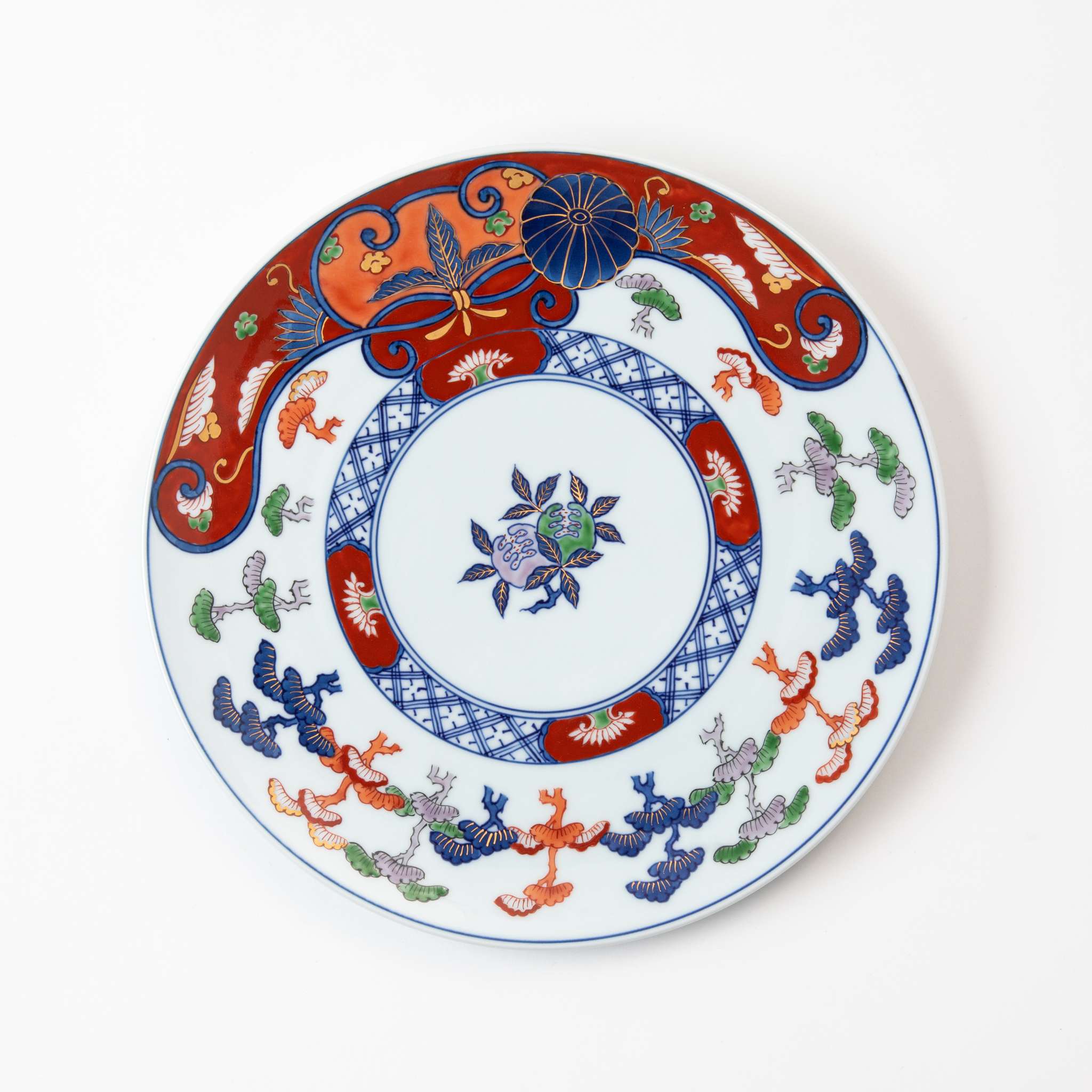
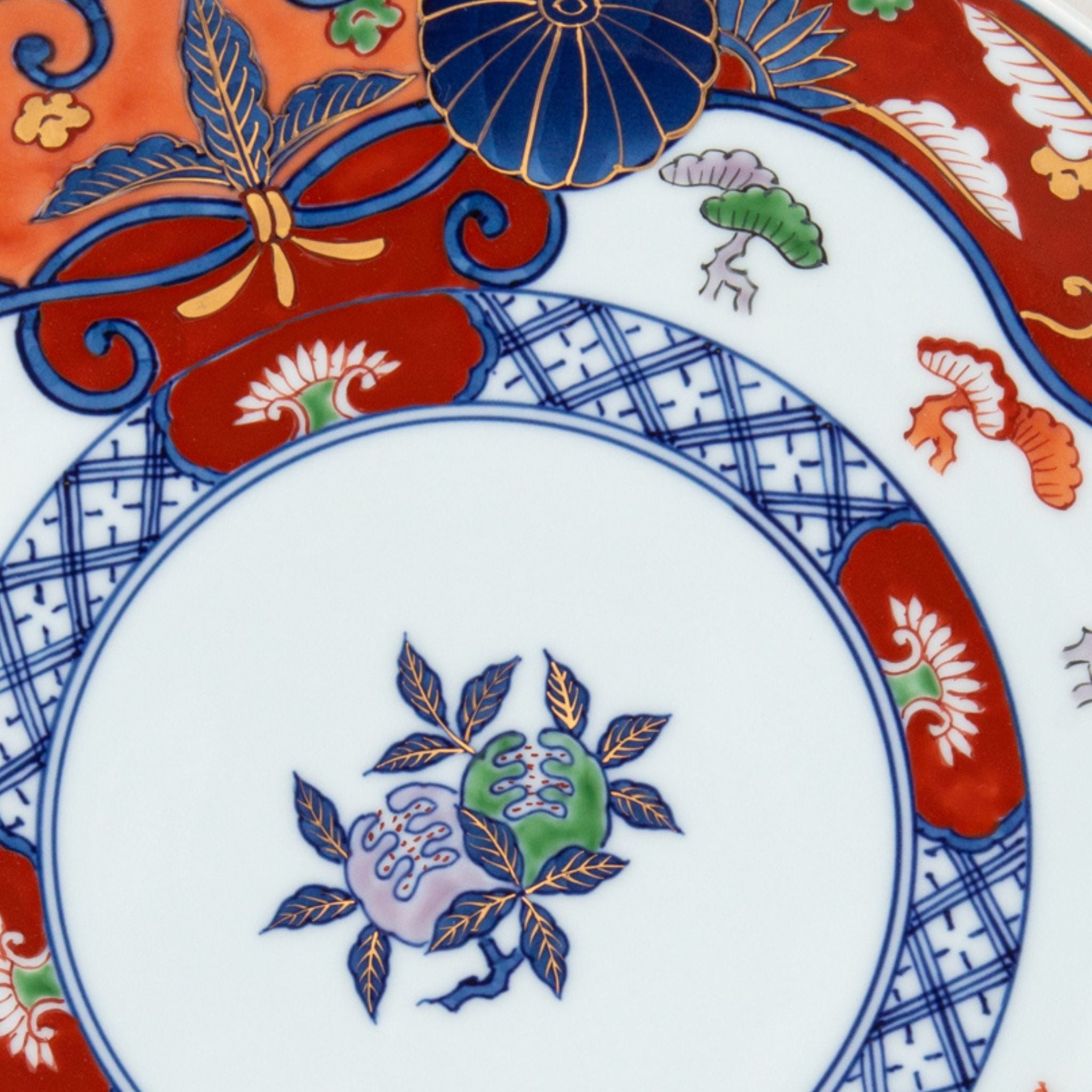
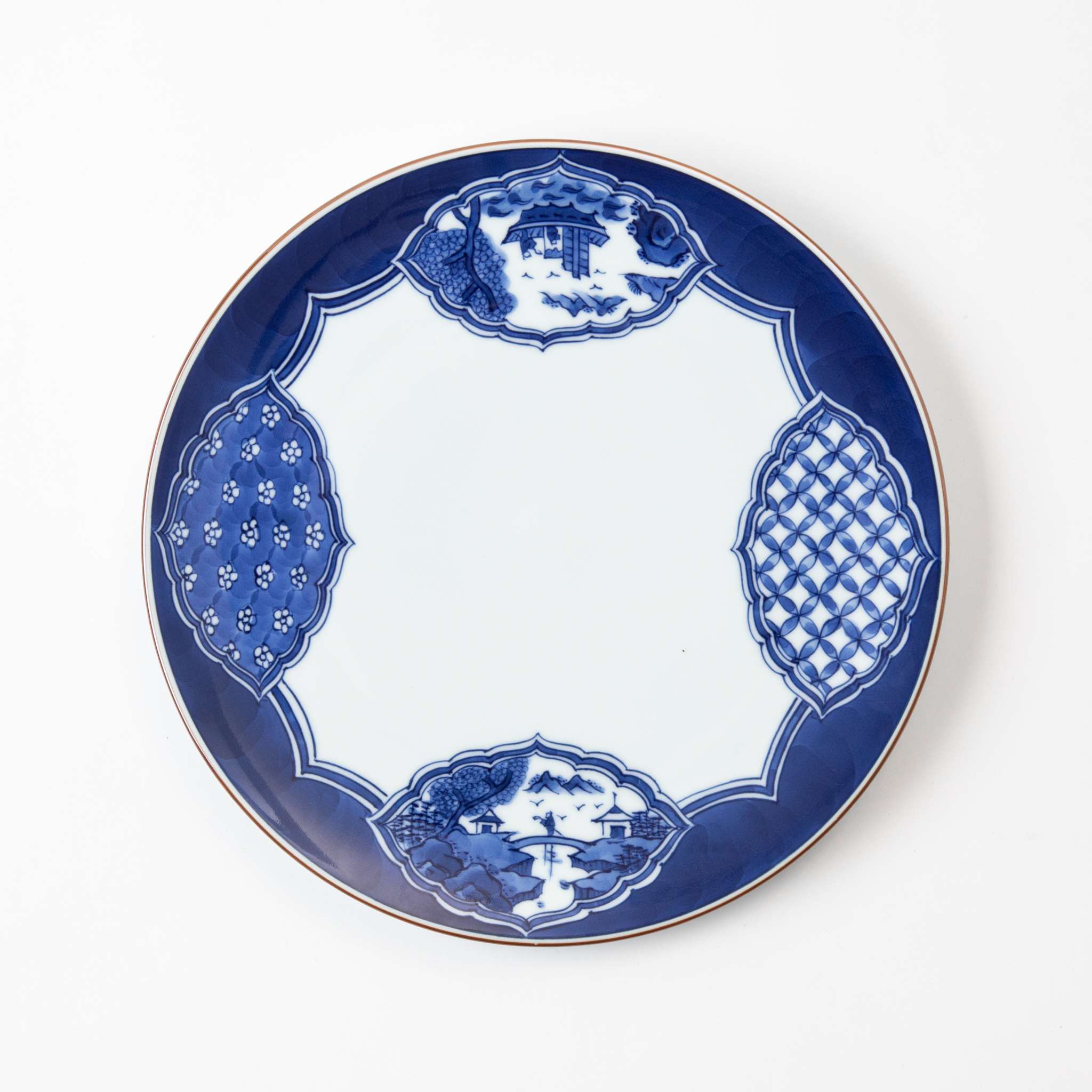
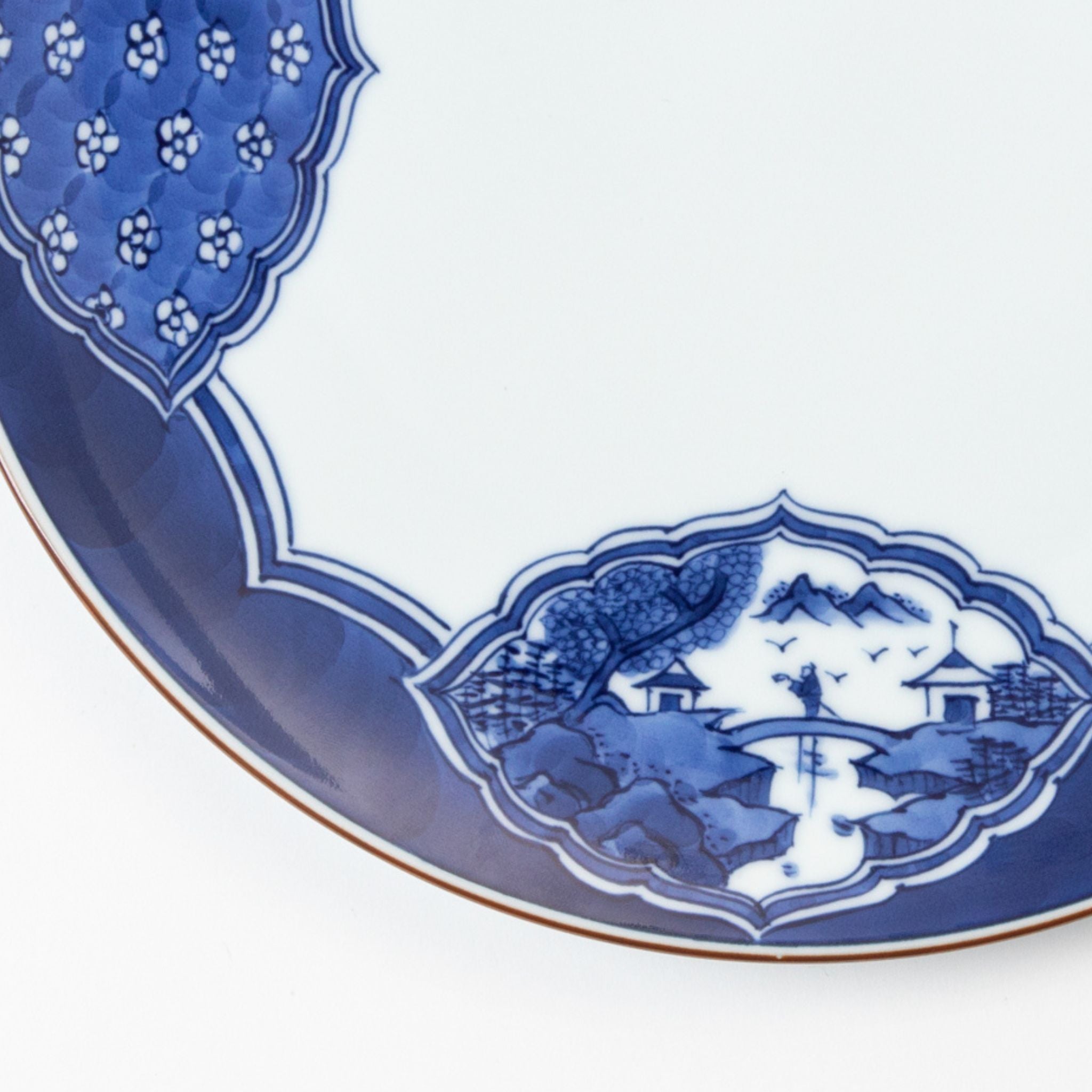
In the quiet landscape of Arita, the birthplace of Japanese porcelain, sits a kiln that has been at work since 1753. Gen-emon Kiln has spent nearly three hundred years refining the craft of Ko-Imari, the hand-painted style of Arita-ware that defined Japanese porcelain during the 17th and 18th centuries. Originally exported from the port of Imari to the royal courts of Europe, Ko-Imari is celebrated for its rhythmic patterns and a bold, signature palette of deep cobalt blues and vibrant iron-reds. For Gen-emon, Ko-Imari is not a relic. It is a practice, maintained with the same hand-painted discipline the kiln has followed for centuries, and made to be used.
During the Edo period, the kiln flourished as a private workshop, producing vibrant, high-fired porcelain that eventually traveled across the globe. By the mid-20th century, Gen-emon made a deliberate choice. The kiln moved its focus from the specialized wares of traditional high-end restaurants (ryotei) to the intimate setting of the family home. It was a decision rooted in a simple belief: that fine porcelain belongs on an ordinary dinner table, not only at a formal one.
In an era defined by mass production, their process remains entirely reliant on people. From the initial crushing of raw porcelain stone to the application of hand-painted motifs, every stage passes through a person's hands. That process has not changed. What leaves the kiln carries the trace of everyone who touched it.

The Flower Karakusa Collection
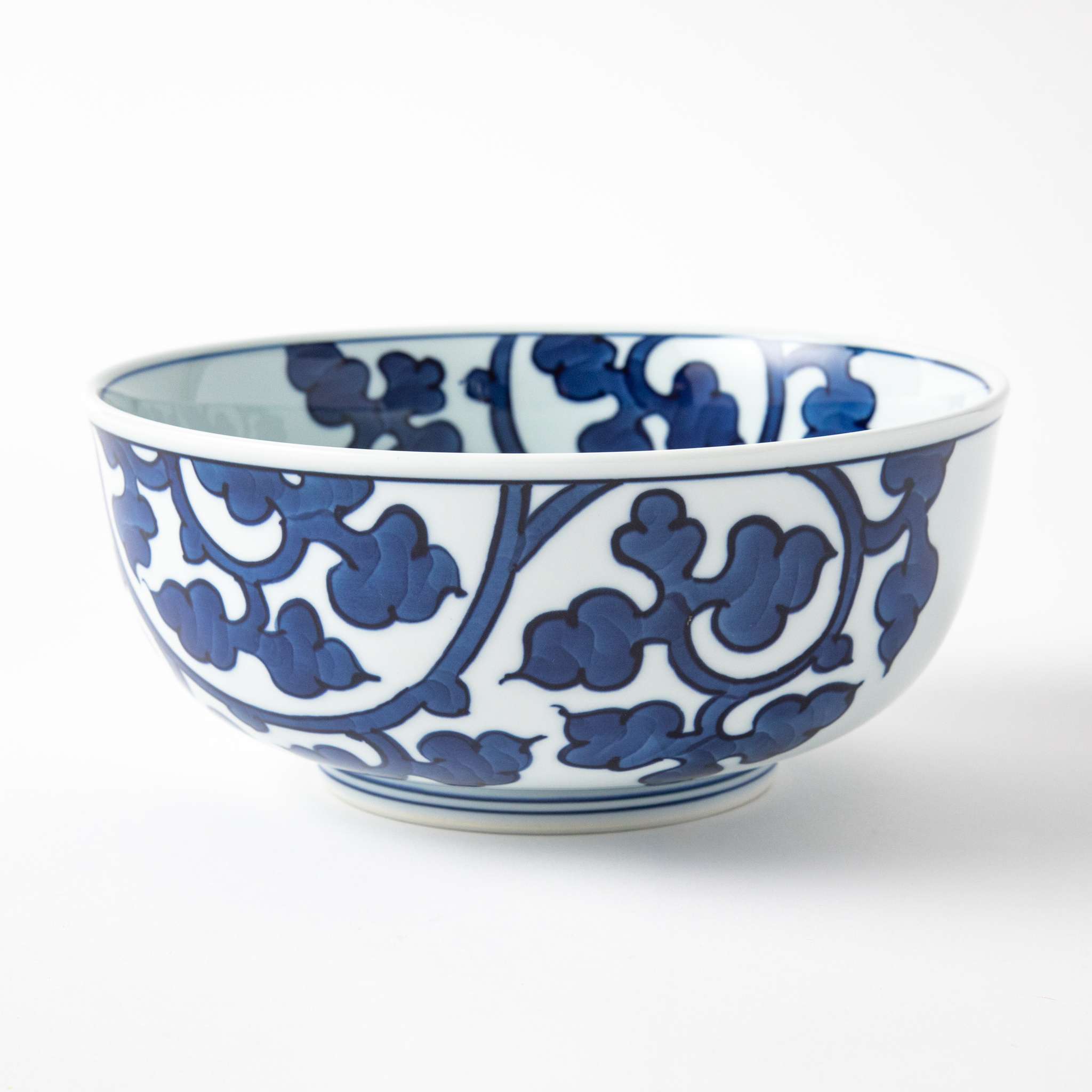
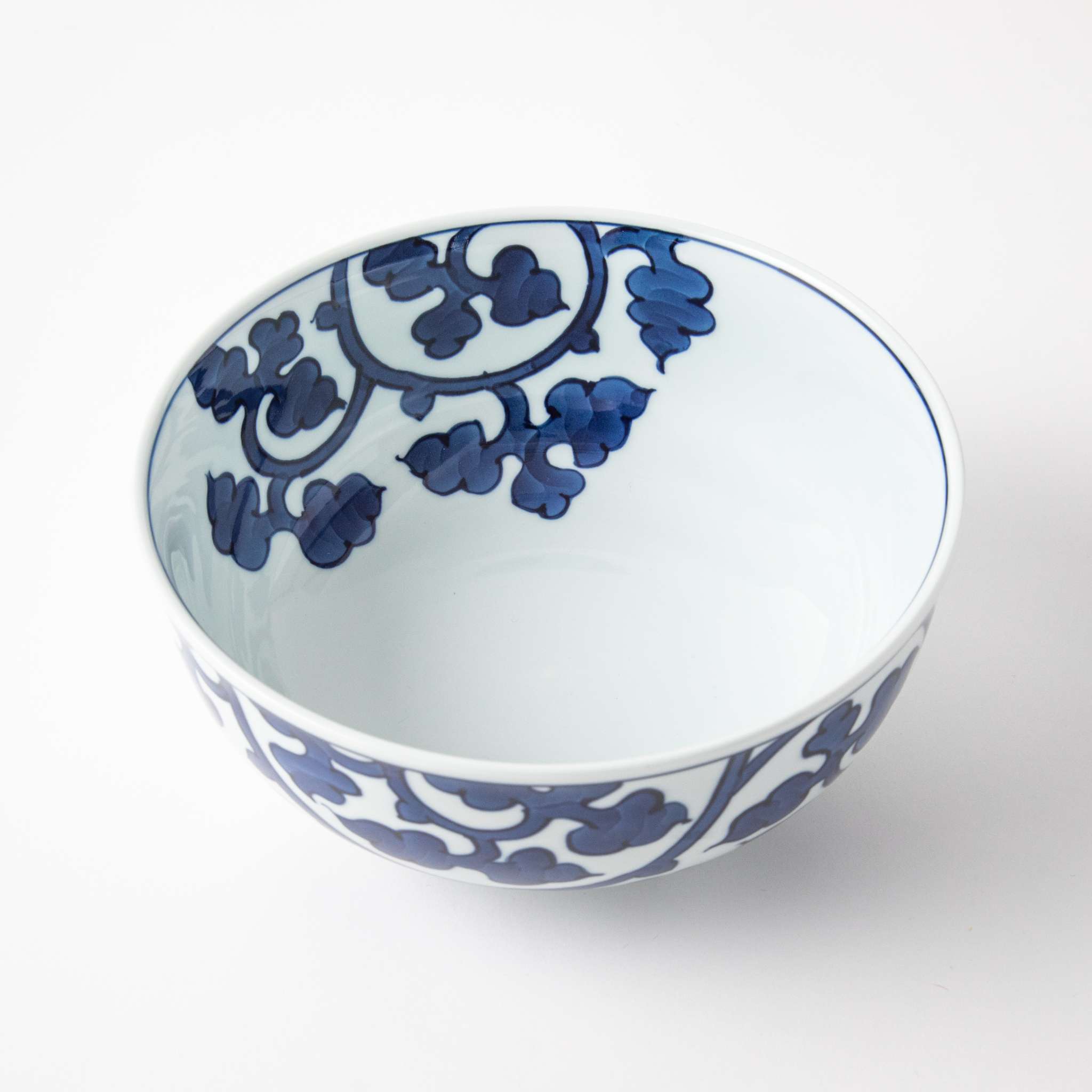
The Flower Karakusa is one of Gen-emon's most enduring motifs. The karakusa vine, an arabesque pattern that traveled from Tang dynasty China into Japanese craft over centuries, moves across each piece in deep cobalt blue with iron-red accents. Gen-emon has applied it across a range of forms, four of which we carry at Omakase.

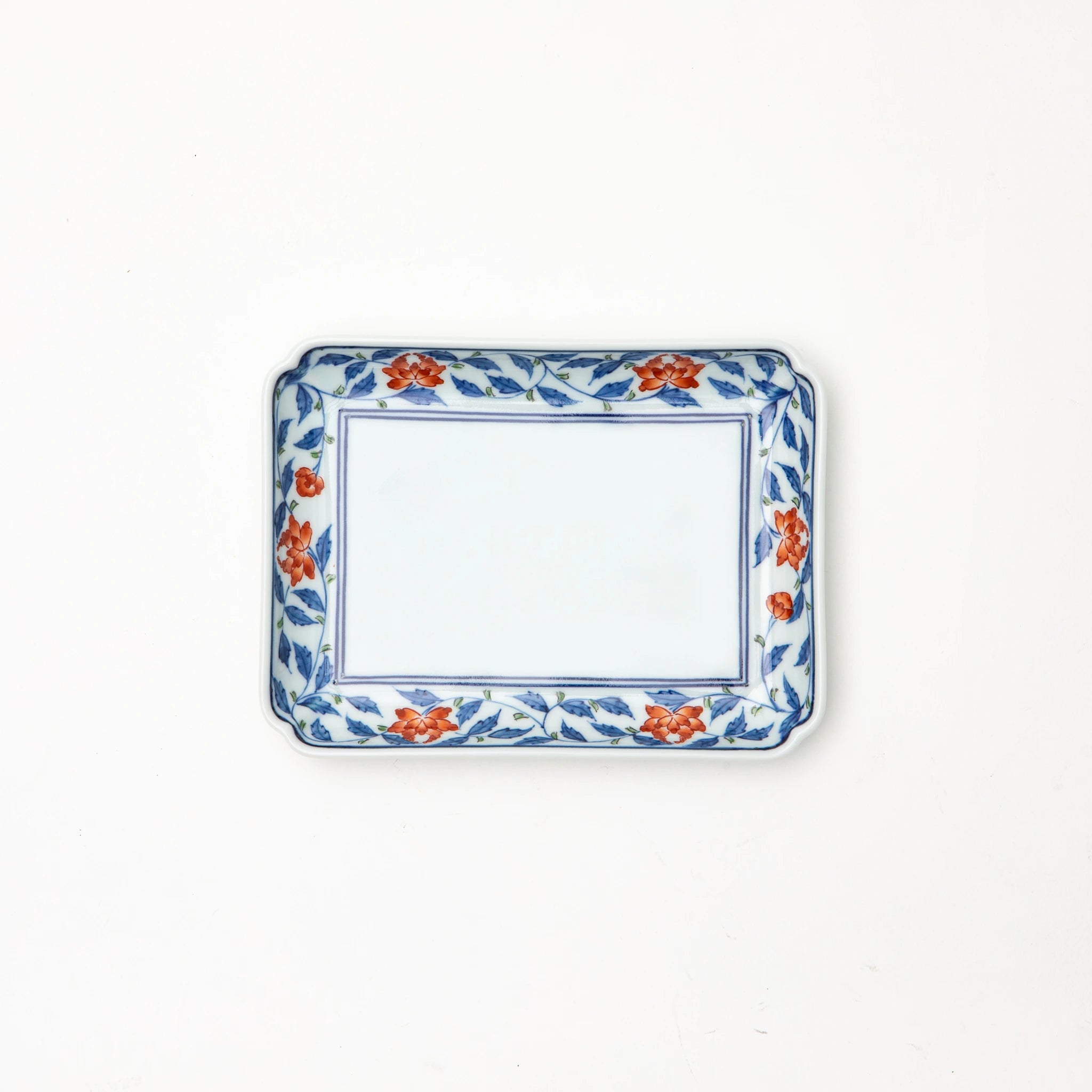
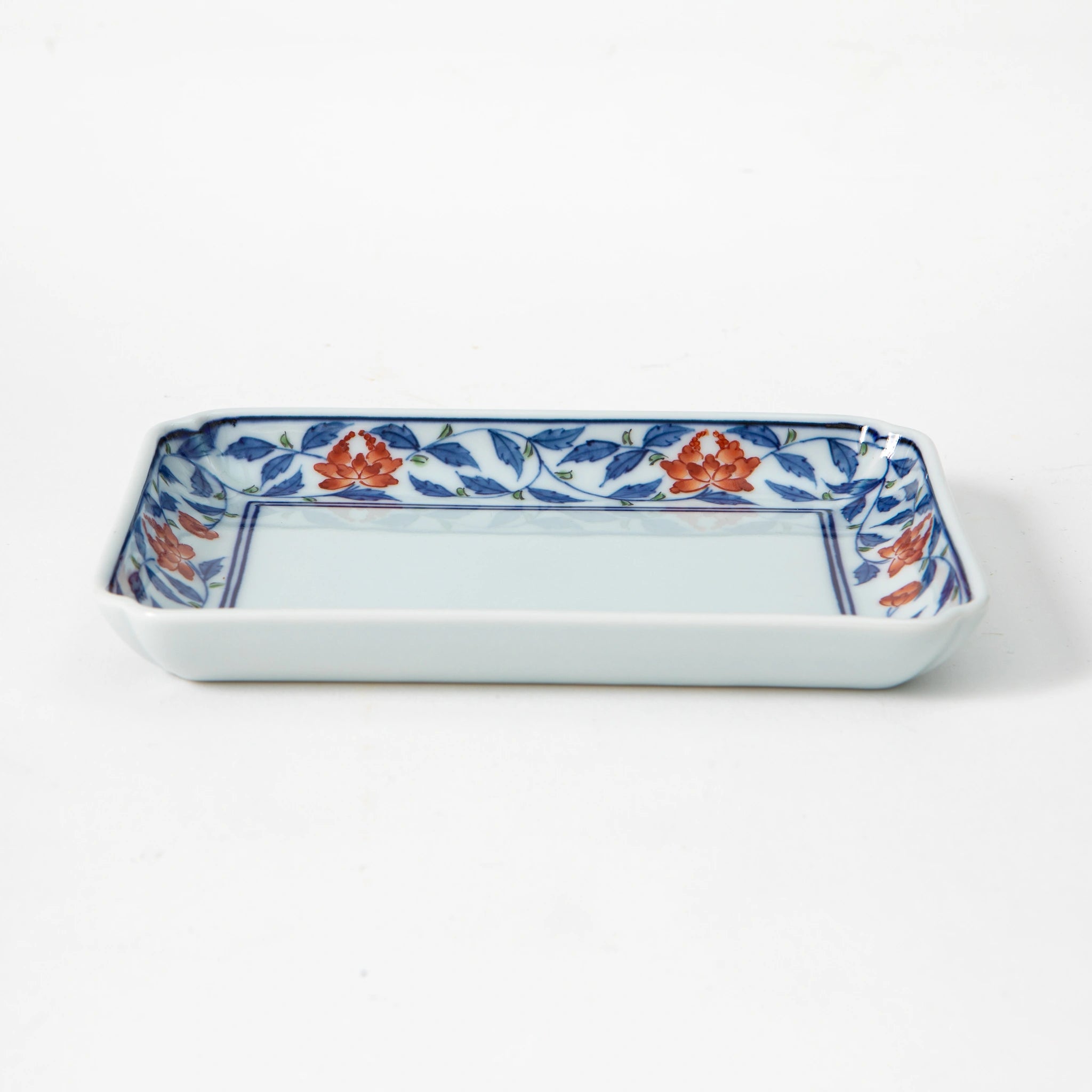
Gen-emon Kiln Arita Flower Karakusa Rectangle Plate
The rectangular plate suits long preparations, sashimi, or grilled fish presented without crowding. The Flower Karakusa vine runs along the border, leaving the interior open, so what is placed on the plate remains the focus. The glaze is finished to the high luster characteristic of Gen-emon's Arita porcelain, the cobalt and iron-red sitting cleanly against the white ground.

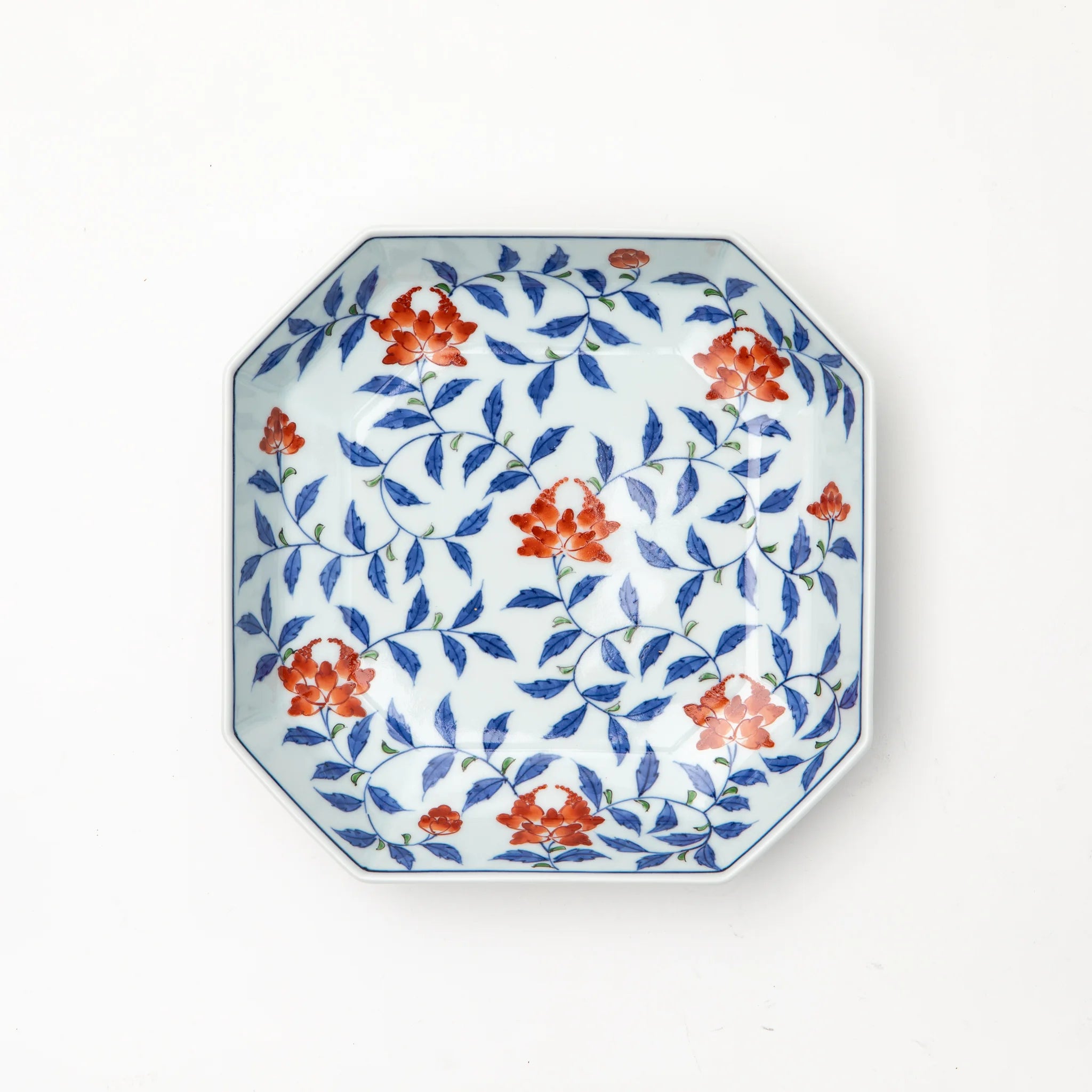
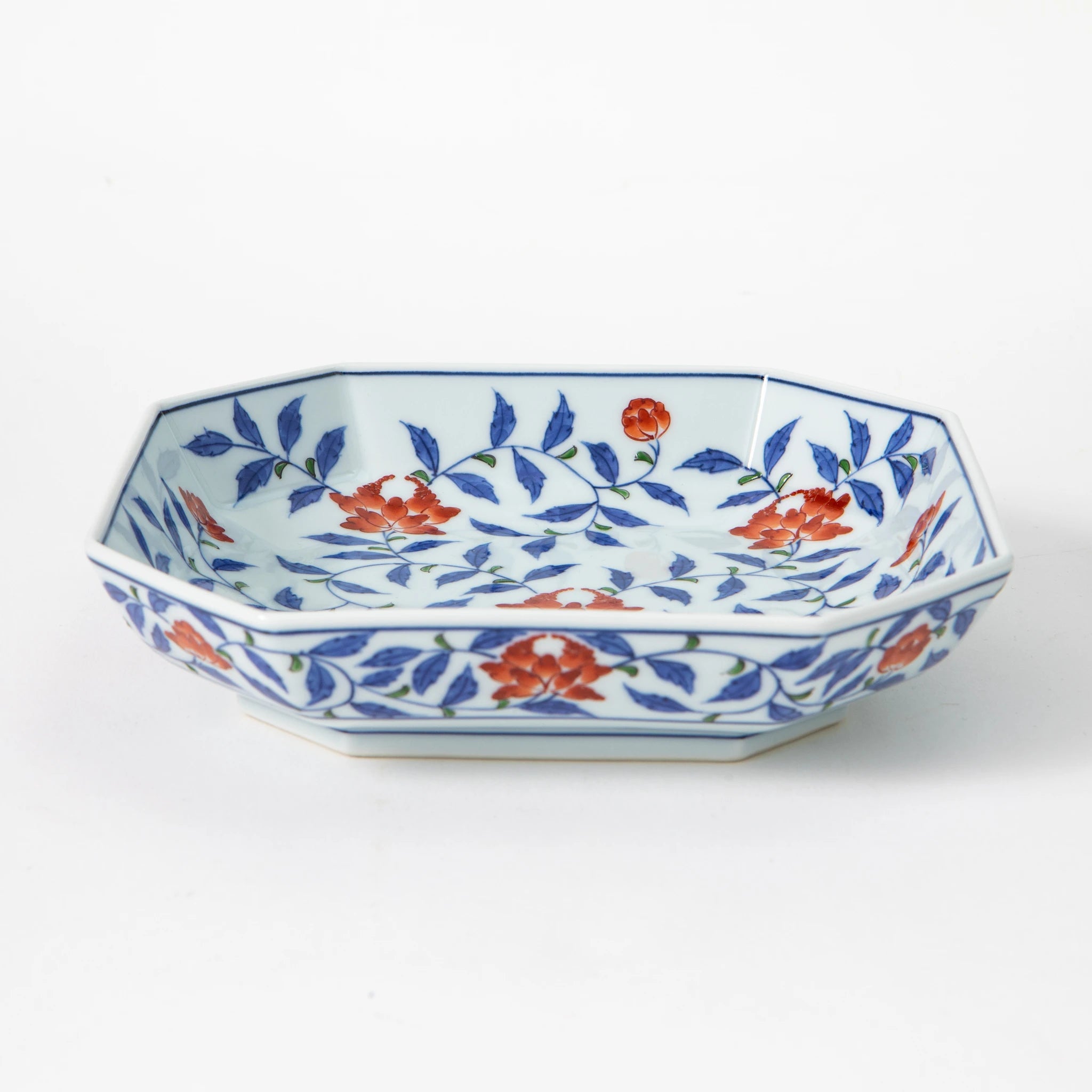
Gen-emon Kiln Arita Flower Karakusa Square Plate
The square plate brings a quiet formality to a main course or a composed appetizer. Its geometry gives the Flower Karakusa motif a different character than the rectangle: the vine meets each corner with the same precision, and the pattern is contained and considered. Like all Gen-emon work, the glaze is high-fired and built for consistent use.

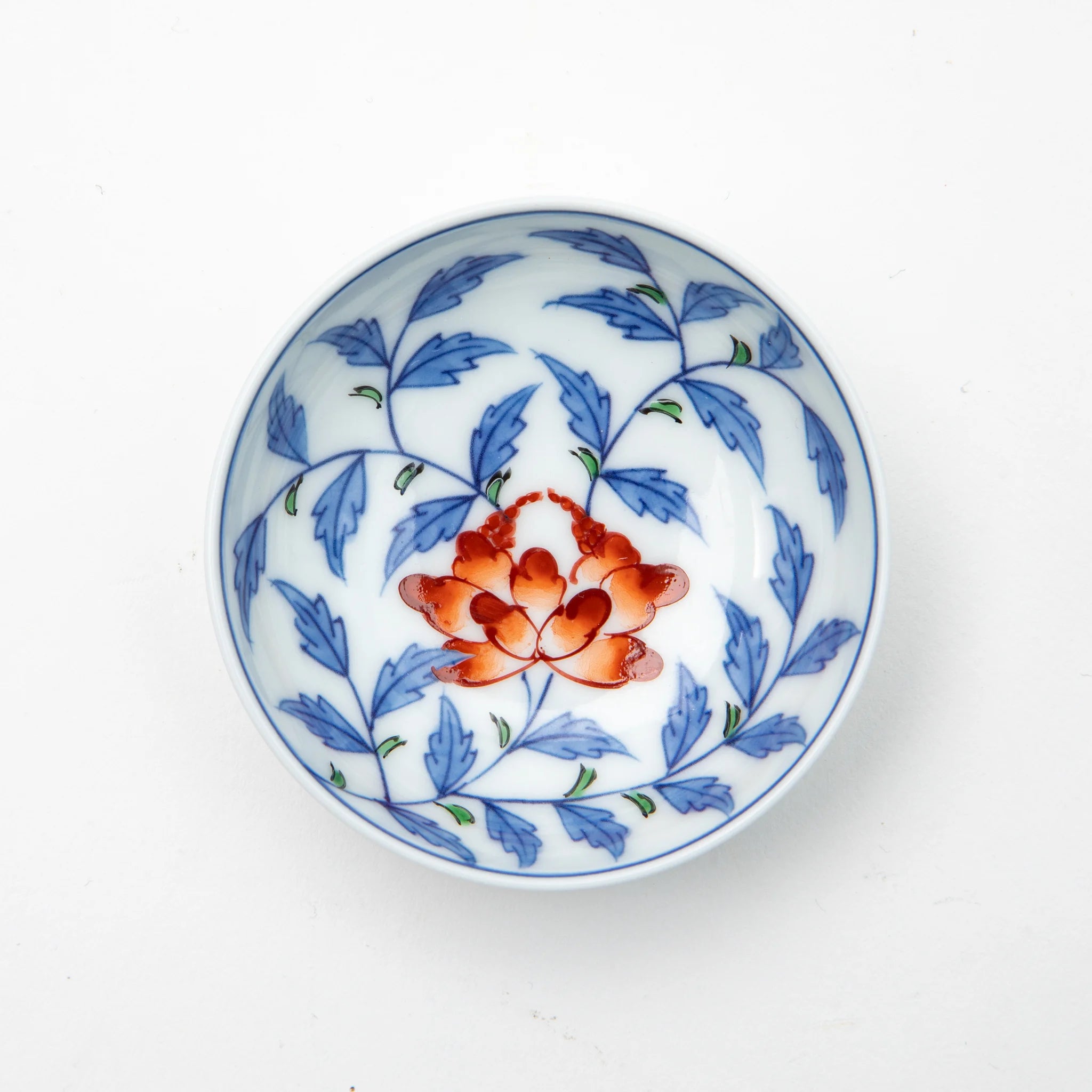
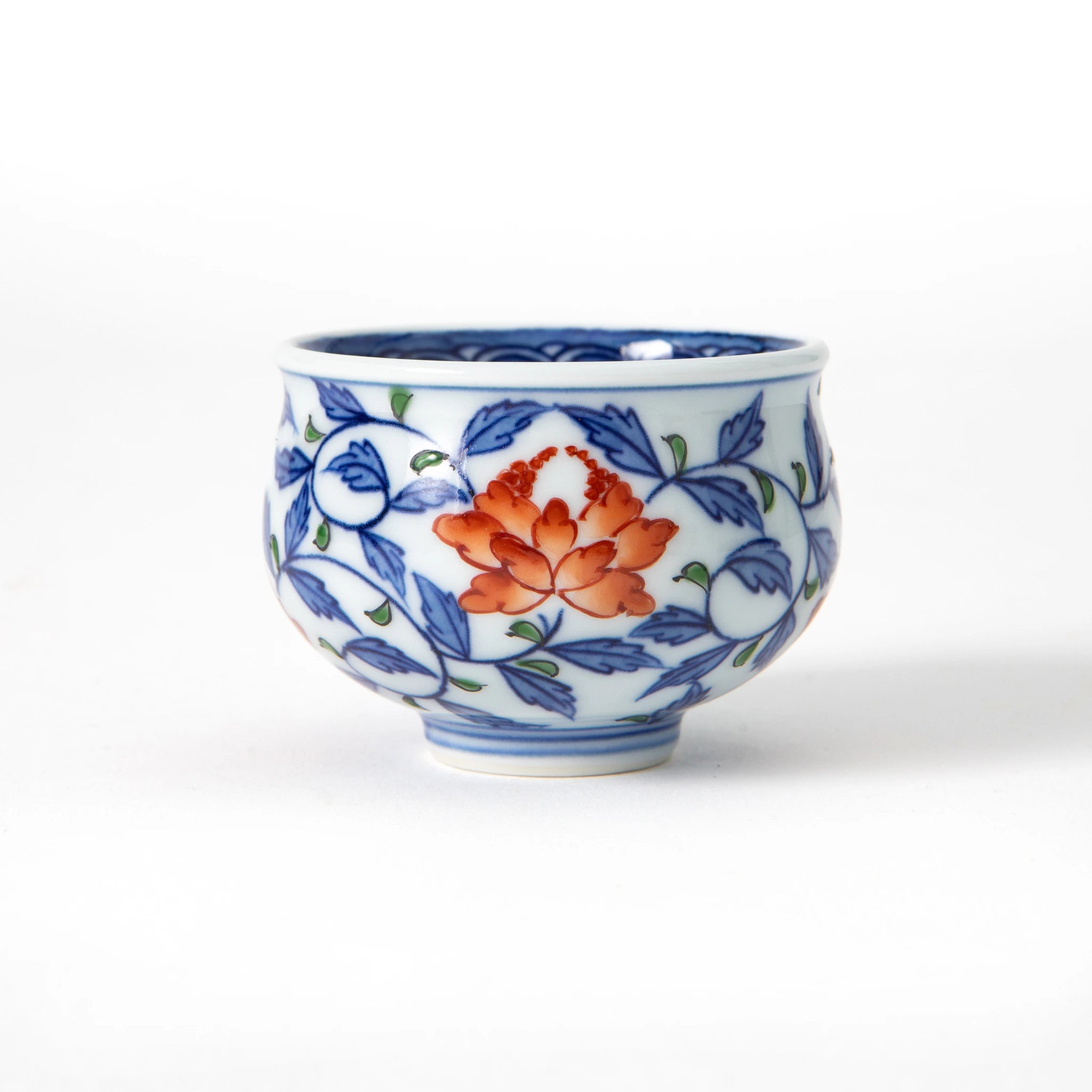
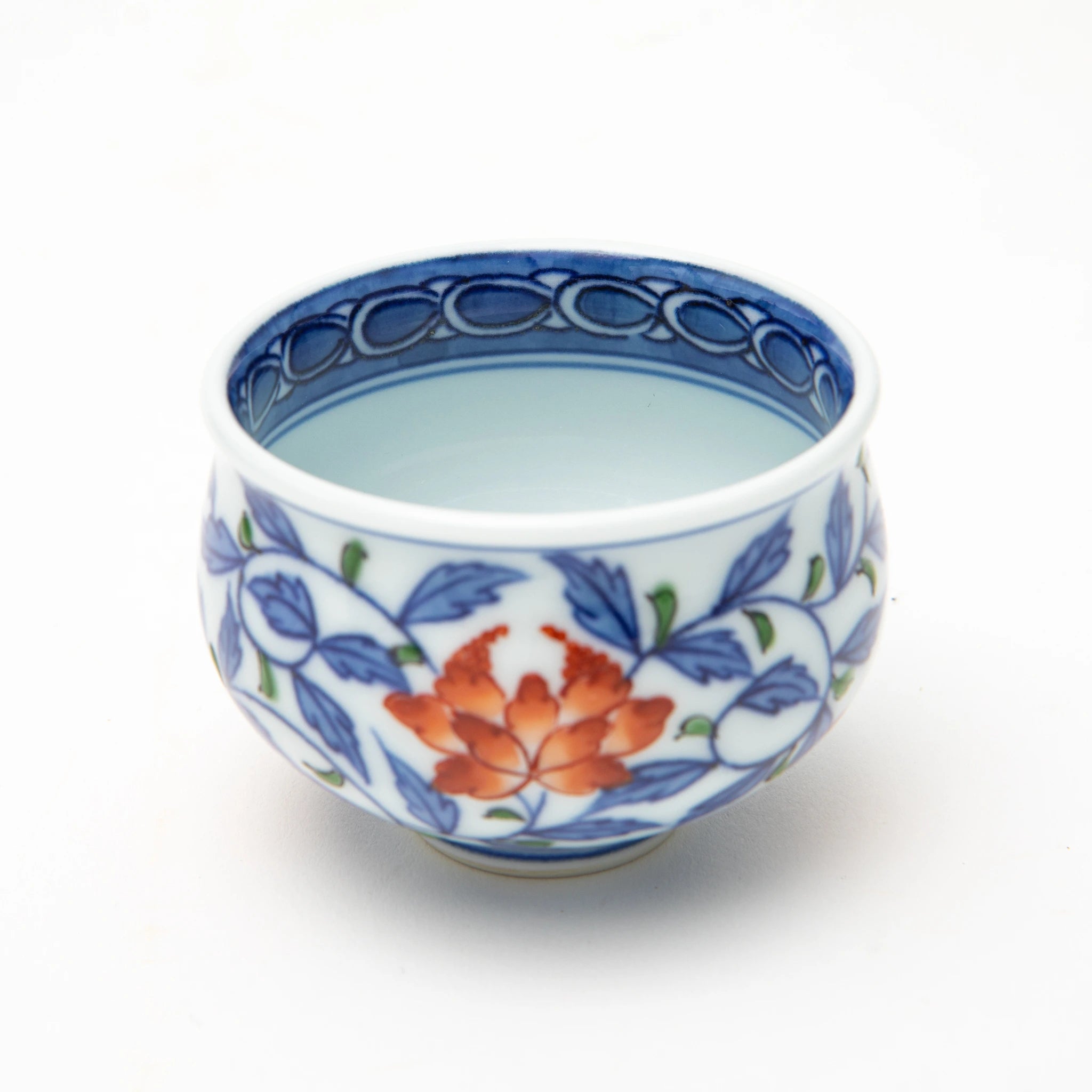
Gen-emon Kiln Arita Flower Karakusa Sake Cup
The sake cup carries the Flower Karakusa motif at a scale where the hand-painted detail becomes most apparent. Small enough to sit comfortably in the palm, the cobalt vine runs the full circumference of the exterior, interrupted by iron-red accents characteristic of the Ko-Imari palette. It is the kind of object that changes slightly depending on the light.

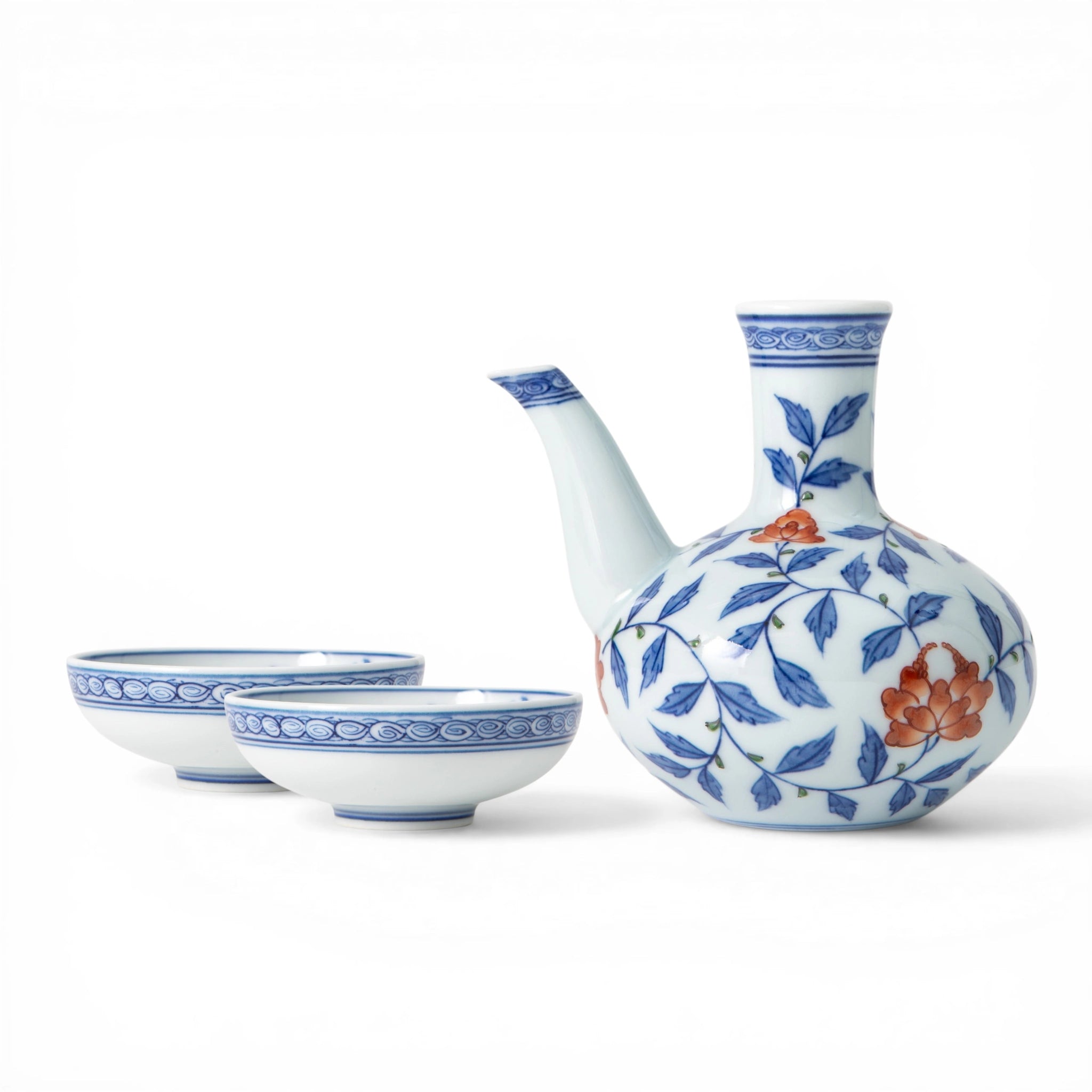
Gen-emon Kiln Arita Flower Karakusa Sake Set
The sake set brings the Flower Karakusa across three pieces: one tokkuri and two sakazuki. The proportions between them are considered. Used together, they make the simple act of pouring sake into something worth slowing down for. The Flower Karakusa motif runs consistently across all three pieces, the cobalt and iron-red uninterrupted from vessel to cup.

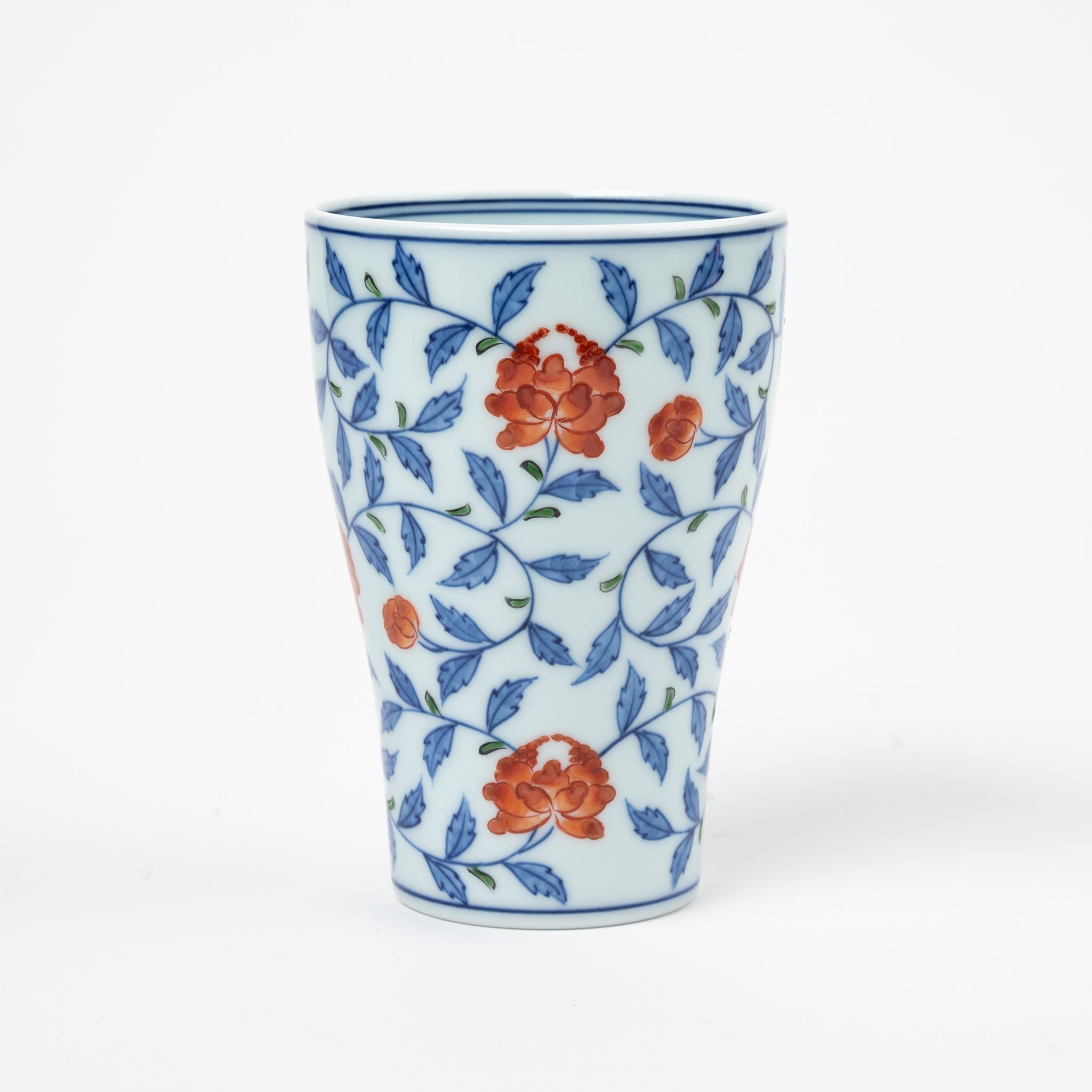
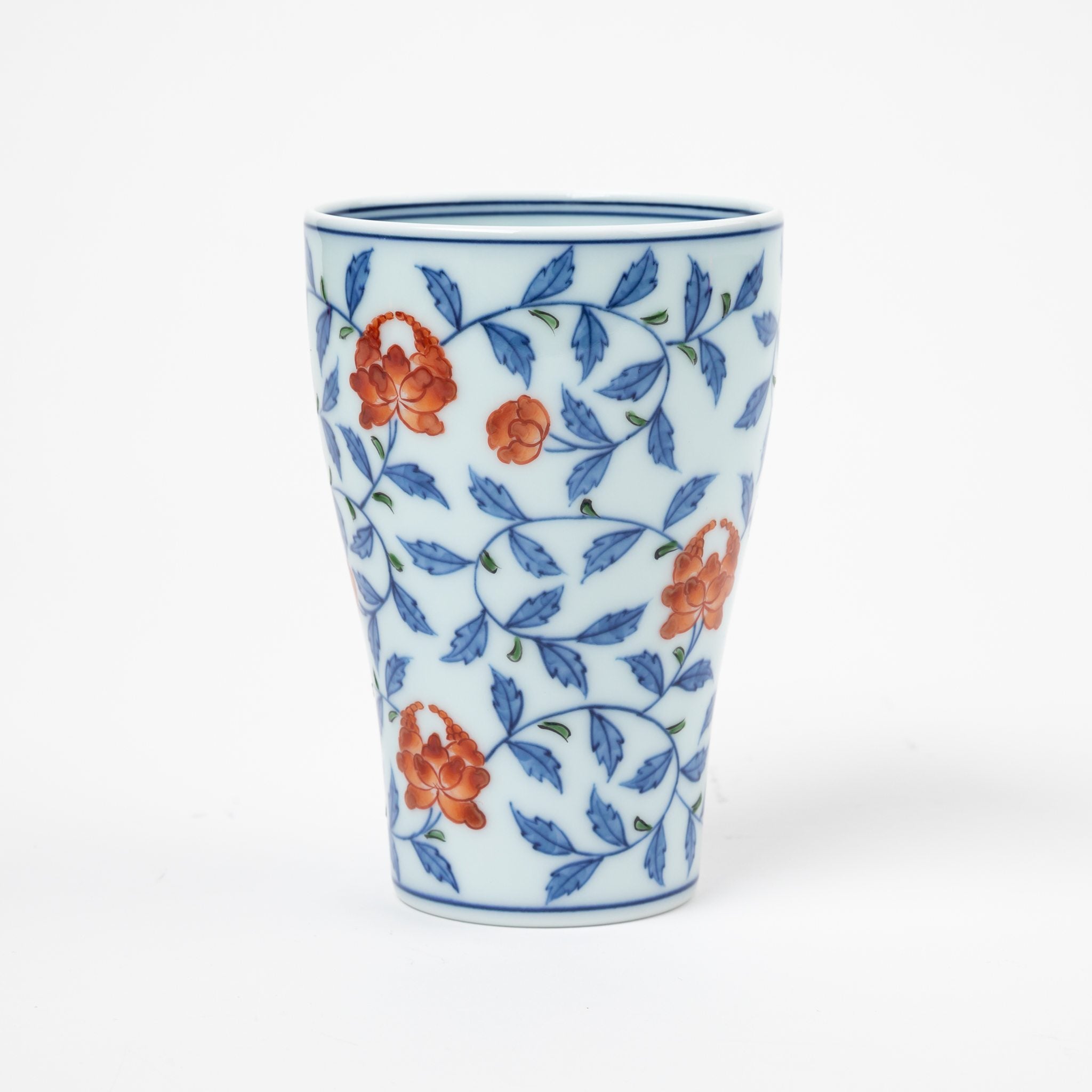
Gen-emon Kiln Arita Flower Karakusa Cup
Crafted to an exceptional thinness, the cup feels nearly weightless in the hand. This translucency allows the Flower Karakusa motif; when held to the light, the hand-painted cobalt and red vines shimmer faintly through the material from within. The rim is finished with a precise delicacy that softens the contact between the vessel and the palate.

Gen-emon Kiln Today
There is a quiet consistency to how Gen-emon has always worked. The current head of the kiln recalls his father's words: 'When someone eats from Gen-emon ware, they should feel good.' Far from decoration, they are made for morning tea, a family dinner, or a meal eaten alone. Objects that earn their place through use. That intention is present in every piece that leaves the kiln.