Skip to product information
1 of 3
Shozo Gama

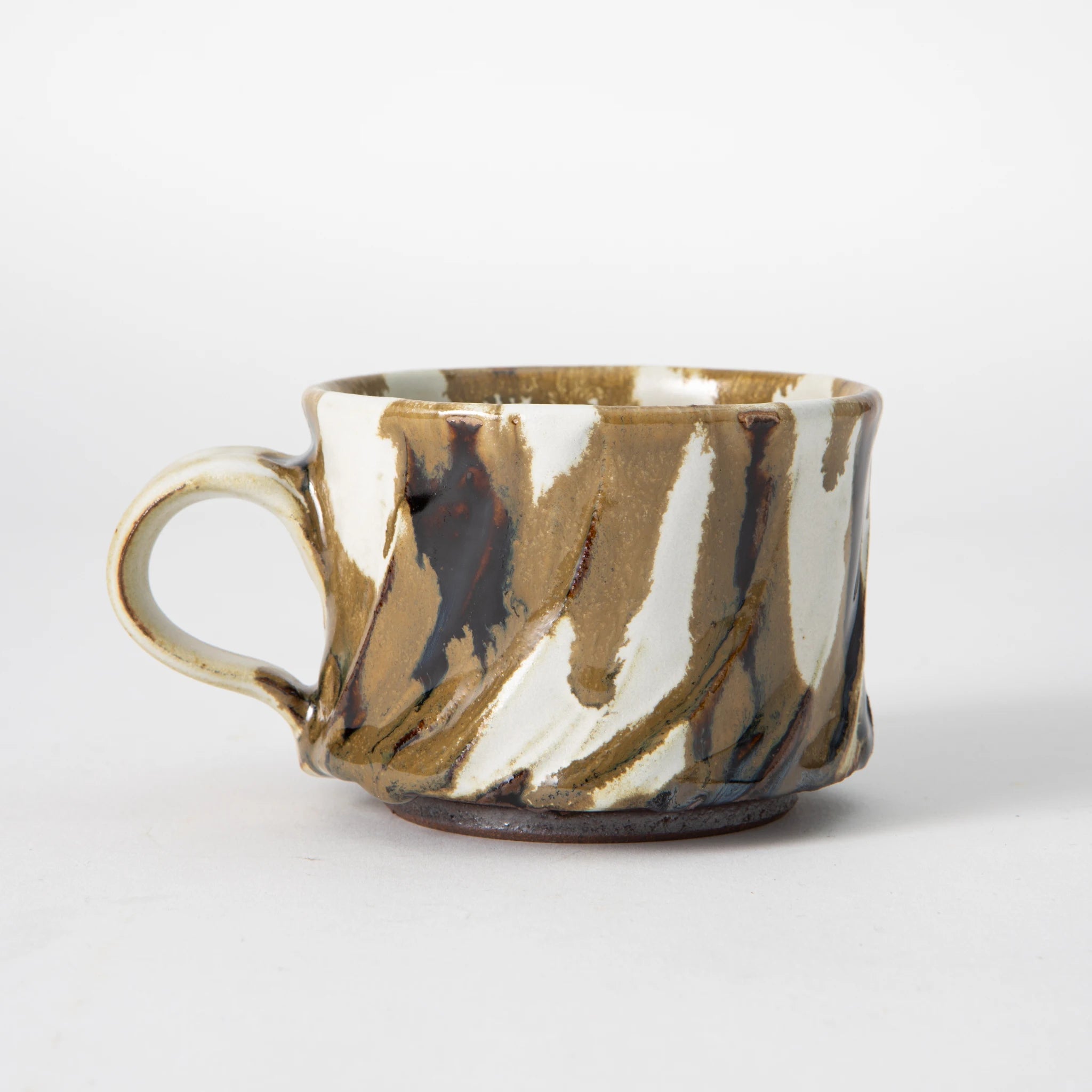
Tamba Ware Large Faceted Mug Ash Glaze Honey Tone

Tamba Ware Large Faceted Mug Ash Glaze Honey Tone

Regular price $69.00 USD
Regular price Sale price $69.00 USD
Sale Coming Soon
Shipping calculated at checkout.

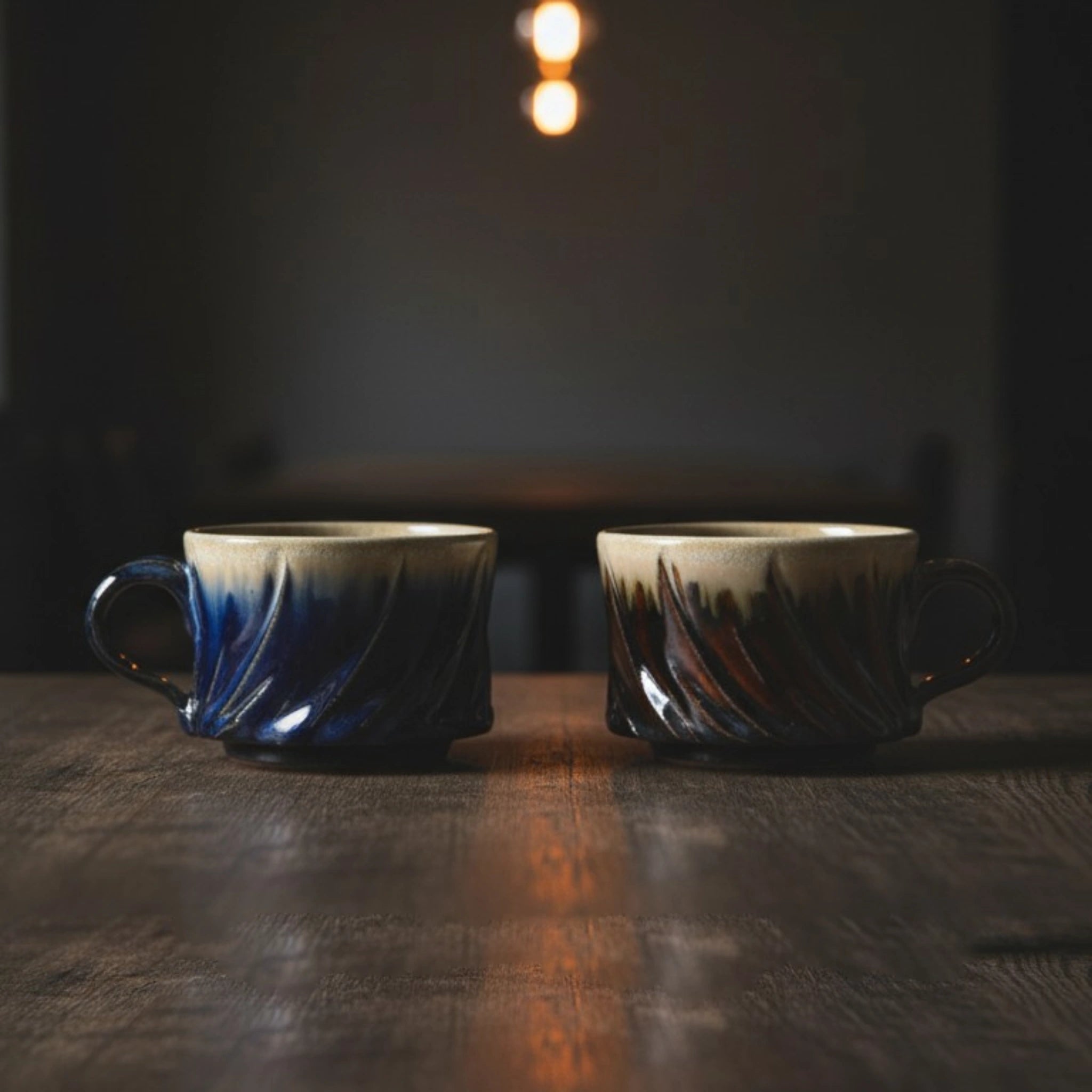
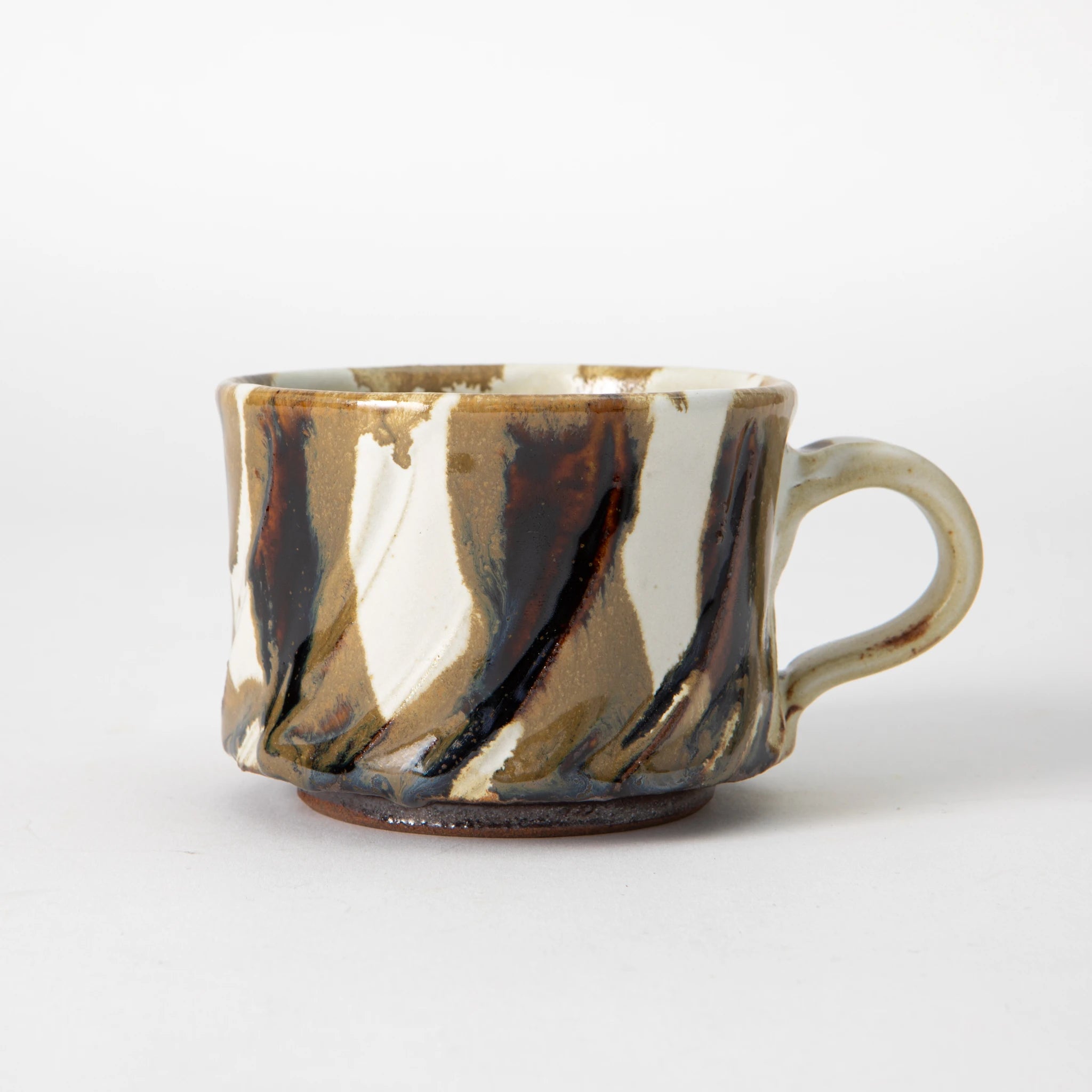
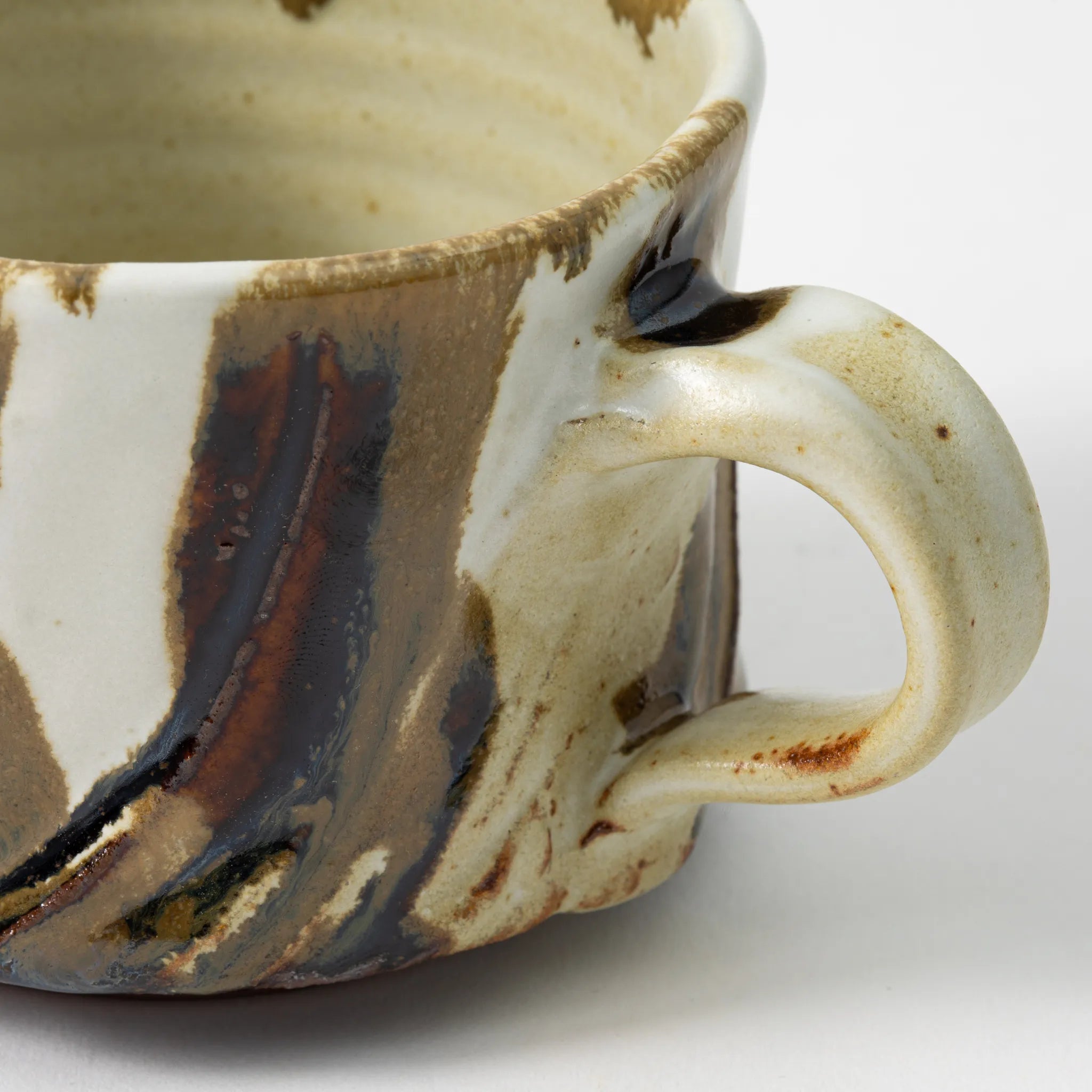
Three glazes meet on this mug, and none of them were fully directed. Warm honey and sandy earth tones occupy the widest portions of each hand-carved facet, interrupted by streaks of deep iron brown and intervals of white that catch the light with a quiet sheen. Where the glazes converge at the ridges, they bleed into one another, producing tones that exist somewhere between smoke and amber. This layered, unpredictable surface is characteristic of Tamba ware at its most expressive, a tradition practiced without interruption for over 800 years in the hills of Hyogo Prefecture and recognized among Japan's six ancient kilns. Shozo Gama works within that lineage, understanding glaze not as decoration applied to form but as a material with its own inclinations. Wide and grounded in proportion, with a pale loop handle that stands apart from the darker body, the mug holds its complexity without effort.

Detail

Size: W 3.7in x L 3.7in x H 2.8in / W 9.5cm x L 9.5cm x H 7cm
Capacity: 200cc / 6.8oz
Material: Ceramic

Care & Use

  • Dishwasher safe
  • Microwave safe
  • Do not use in the oven

Colors and patterns may vary from piece to piece depending on the temperature and location of the kiln during production.

View full details

Eight Centuries of Fire and Clay in the Mountains of Hyogo

Tamba ware comes from the Tachikui area of Hyogo Prefecture, a quiet hillside valley an hour from Osaka and Kyoto where kilns have fired without interruption for over 800 years. It is one of the Six Ancient Kilns of Japan, and among the most distinctive for the way its tradition evolved: not through court patronage or ceremonial prestige, but through an unbroken conversation between potter and daily life.

From its origins in the late Heian period, Tamba ware was shaped for use rather than display. Jars for grain, urns for water, vessels built to endure. Unusually for a pottery region of its age, Tamba potters delivered their work directly to merchants in Osaka and Kyoto rather than through wholesalers, keeping them attuned to the rhythms of urban living across every era. This directness gave the tradition a rare adaptability, with no fixed aesthetic and no single recognizable form across its eight centuries.

The firing process itself is elemental. Pieces spend up to 60 hours in hillside climbing kilns fed by pine wood, with ash from the fire settling onto the clay and vitrifying into surfaces that cannot be planned or repeated. In the 20th century, philosopher Yanagi Soetsu and British studio potter Bernard Leach both recognized in this quiet material honesty the very essence of the Mingei folk craft movement. Tamba ware was designated a Japan Heritage site in 2017.

Brand History

Shozo Gama stands on the northern edge of Tachikui, the historic pottery village of Tamba Sasayama, set on elevated ground where the workshop and gallery open onto the seasonal mountain landscape of Hyogo Prefecture. Here, surrounded by the unhurried rhythms of the Tamba hills, Ichino Motokazu and his son Ichino Shusaku work within one of Japan's most enduring ceramic traditions, shaping each piece entirely by hand from local Tamba clay.

Shusaku Ichino, the third generation of the kiln's practice, has developed a voice that is at once rooted in tradition and quietly forward-looking. Working with wood-fired kilns and ash glazes that shift and deepen through the firing, he pursues the powerful, grounded character that defines the finest Tamba ware, while bringing his own considered sensibility to form and surface. The result is work that carries the weight of 800 years of craft without being bound by it.

From tea bowls and flower vessels to tableware made for daily use, every piece that leaves Shozo Gama reflects the same conviction: that the most meaningful objects are those shaped with patience, fired with intention, and made to belong in the hands and on the tables of those who will use them.