Skip to product information
1 of 3
Hinomigama

Shigaraki Ware Mug Kohiki with Vidro Glaze

Shigaraki Ware Mug Kohiki with Vidro Glaze

Regular price $54.00 USD
Regular price Sale price $54.00 USD
Sale Coming Soon
Shipping calculated at checkout.

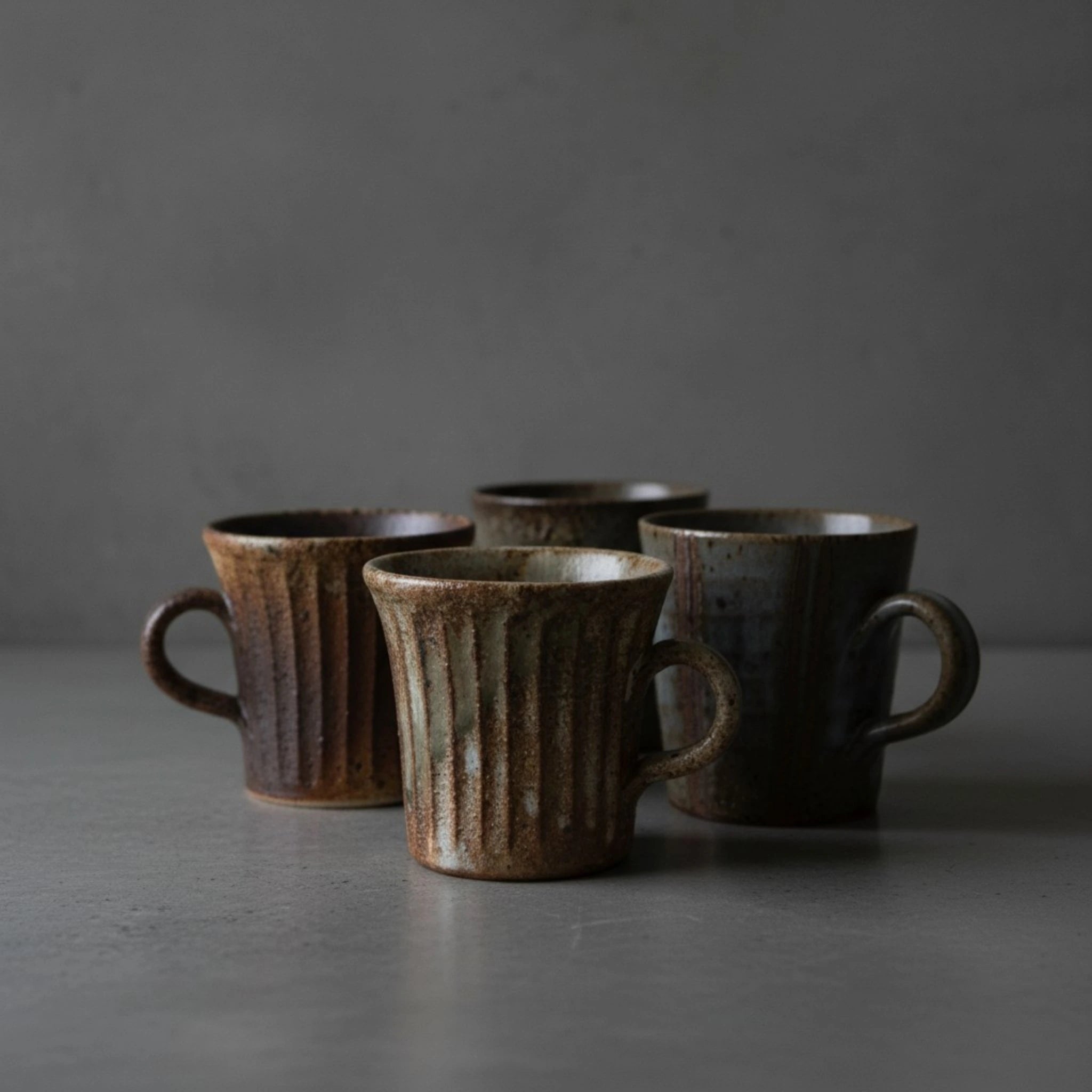
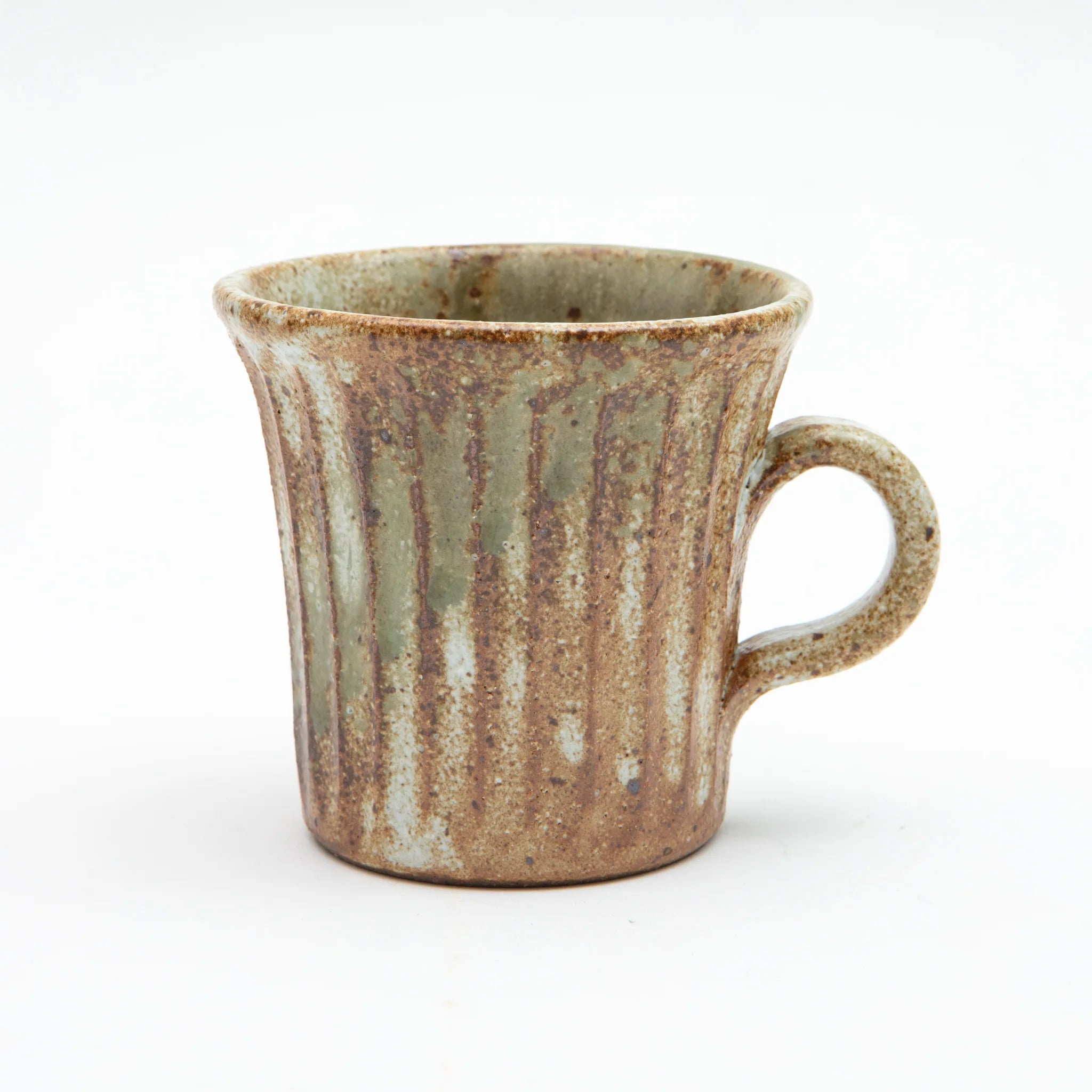
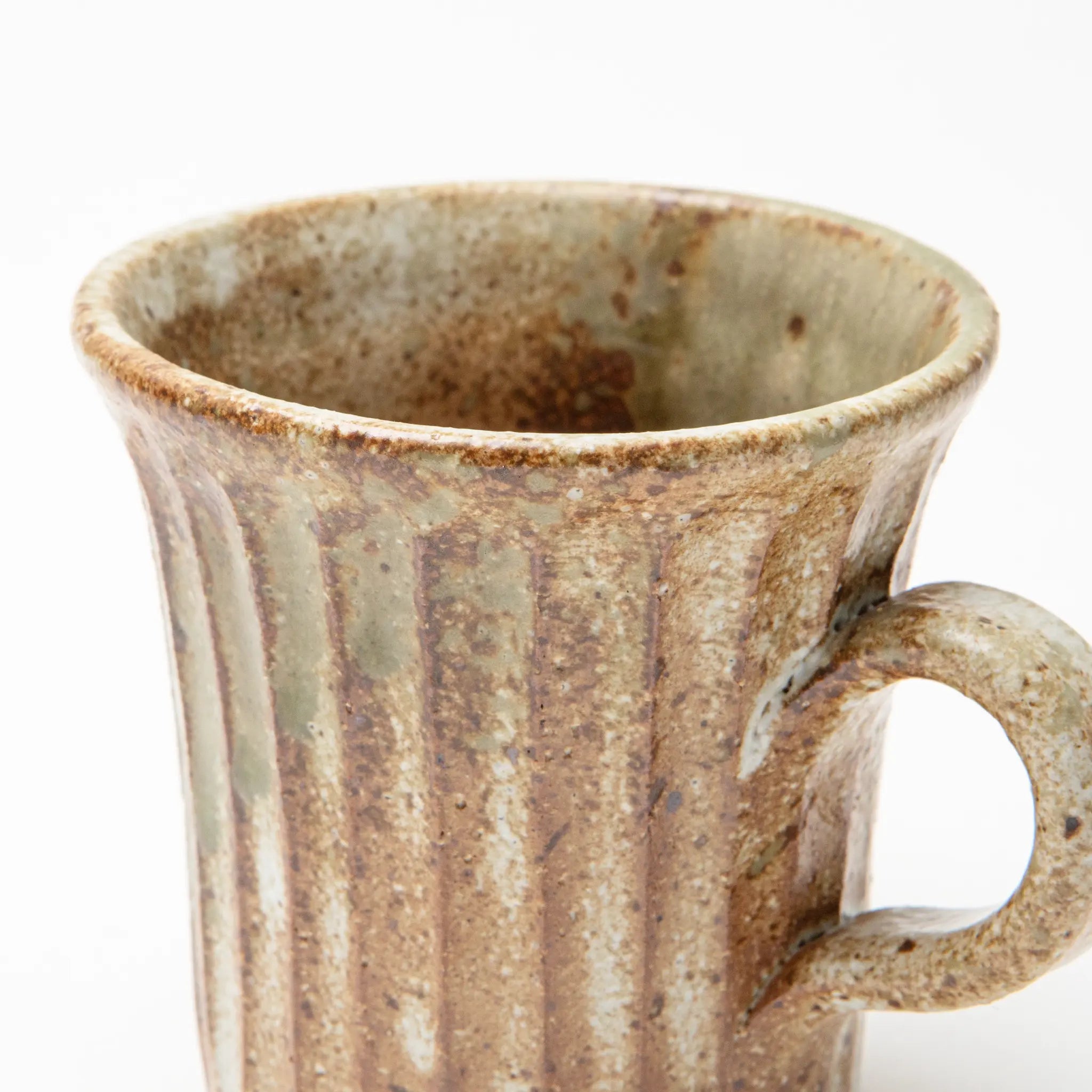
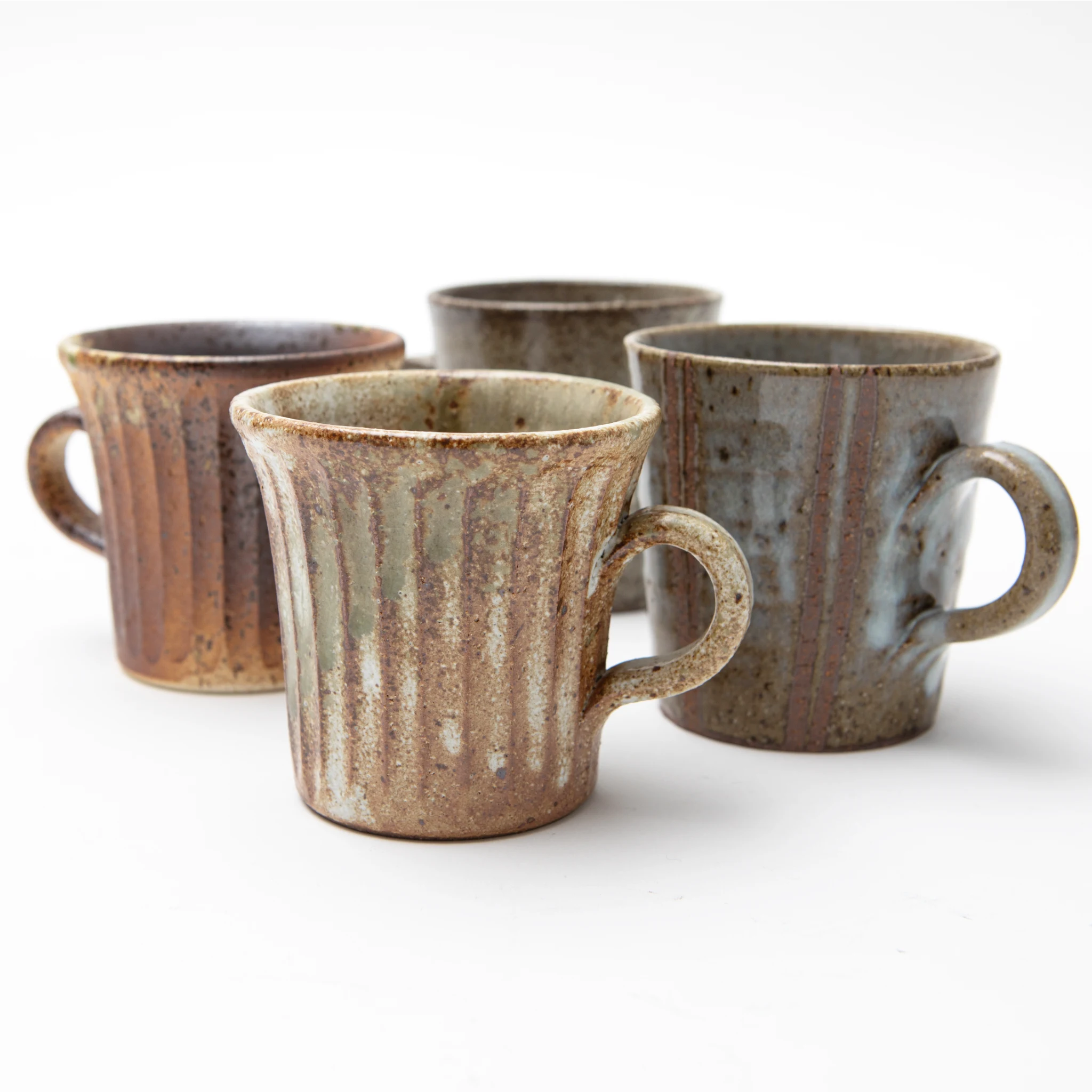
Crafted at Hinomigama in the storied kiln town of Shigaraki, this mug brings together two distinct glazing traditions in a single, quietly compelling form. Kohiki, a technique originating in Korean ceramic culture and later adopted by Japanese potters, involves applying white slip over a clay body, creating a surface that appears at once veiled and luminous. Here, that foundational layer is animated by vidro glaze, a wood ash-derived glass glaze that introduces soft tones of sage and celadon, trailing in uneven vertical paths along the ribbed exterior. The coarse Shigaraki clay asserts itself beneath, its iron-rich warmth surfacing through the glaze where the firing has drawn the two into dialogue. Flared gently at the rim and grounded at the base, the form carries a composure that reflects Shigaraki's 1,200 year ceramic heritage with precision and restraint.

Detail

Size: W 2.6in x L 3.5in x H 3.3in / W 6.5cm x L 8.8cm x H 8.5cm
Material: Ceramic

Care & Use

  • Handwash only
  • Do not use in microwave or oven
  • Due to the handcrafted nature, the colors, glaze, and patterns may vary from piece to piece.
View full details

Earth, Fire, and a Thousand Years of Quiet Mastery

Shigaraki ware originates in the mountain-enclosed valley of Shigaraki in Shiga Prefecture, with a recorded history reaching back to 742, when tiles were fired for Emperor Shomu's imperial palace in the region. It is one of the Six Ancient Kilns of Japan, a distinction shared with only 5 other regions whose pottery traditions have endured without interruption for nearly a millennium.

What defines Shigaraki is its clay, coarse and iron-rich, derived from the ancient bed of Lake Biwa. Wood ash from the firing adheres to the surface and fuses with naturally occurring feldspar, forming a glaze without any applied coating. The same process produces hi-iro, a warm reddish-orange blush, and koge, the subtle scorch marks left where flame has touched most directly. No 2 pieces emerge the same.

During the 16th century, tea master Sen no Rikyu commissioned Shigaraki pieces for ceremony, finding in its deliberate imperfection the very essence of wabi-cha. For those who understood, Shigaraki's refusal to be perfect was precisely its virtue.

Brand History

Hinomigama was established in September 1988 in Shigarakicho-Eda, Koka City, Shiga Prefecture, situated within the living heart of one of Japan's oldest and most storied pottery regions. Founded by Fujito Matsuo, the kiln takes its name from the Japanese words for flame and taste, a quiet declaration of the philosophy that guides every piece made here: that fire is not merely a process, but a presence that leaves its mark on the clay and, by extension, on the life of those who use it.

Working within the Shigaraki tradition, Hinomigama produces tableware shaped and fired entirely by hand. Each piece is formed from the region's characteristically coarse, feldspar-rich clay and wood-fired in the Shigaraki manner, meaning natural ash glazes, hi-iro blush, and subtle flame markings emerge through the kiln's own atmosphere rather than through applied decoration. The result is vessels that carry the unmistakable depth and irregularity that Shigaraki has been celebrated for across centuries.

Hinomigama's work is grounded in a considered conviction: that the finest tableware is not reserved for ceremony, but belongs on the everyday table, enriching the quiet rituals of sharing a meal with the same integrity of craft that has defined this region for over a millennium.