
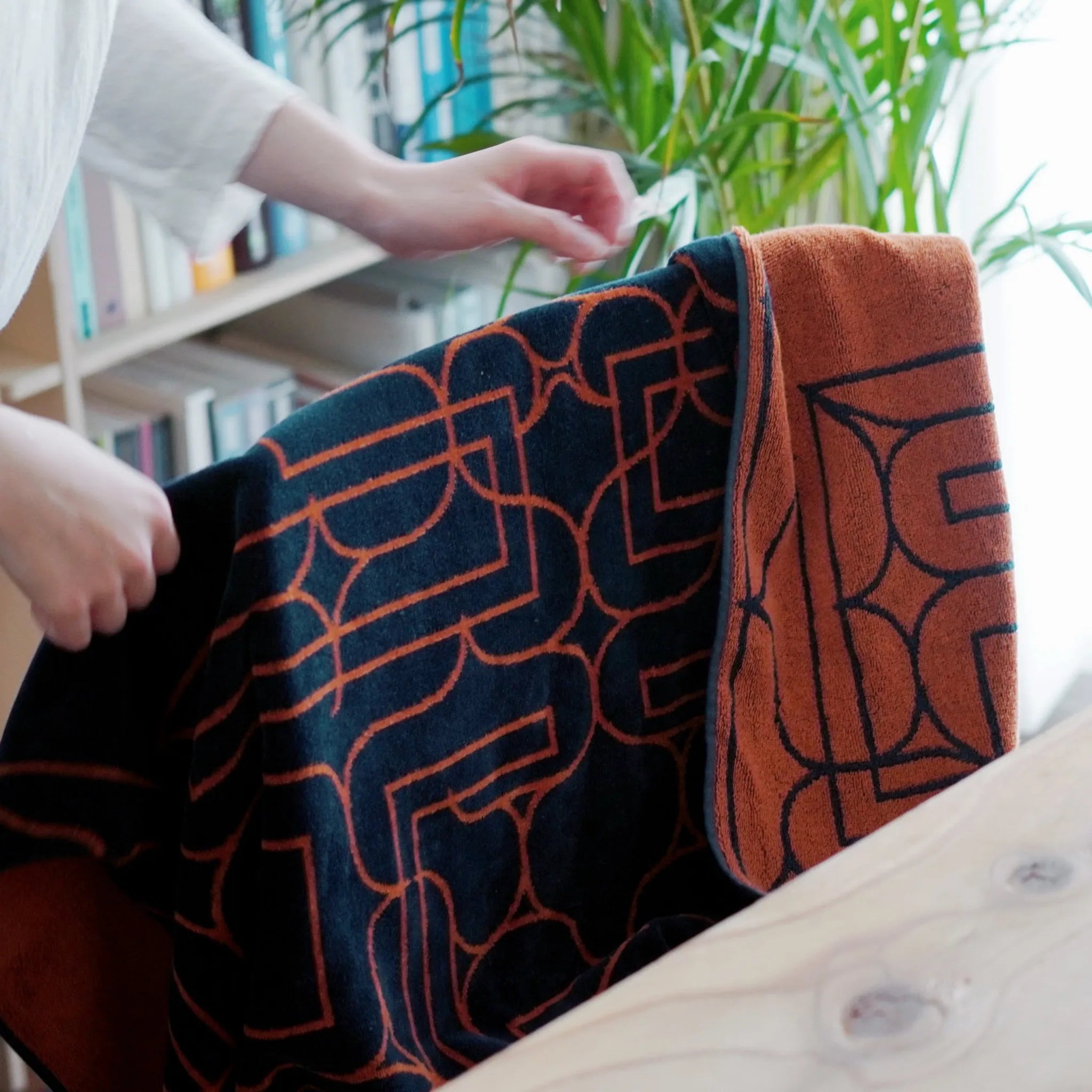
Ainu Pattern Imabari Towel Blanket cikarkarpe Navy and Orange
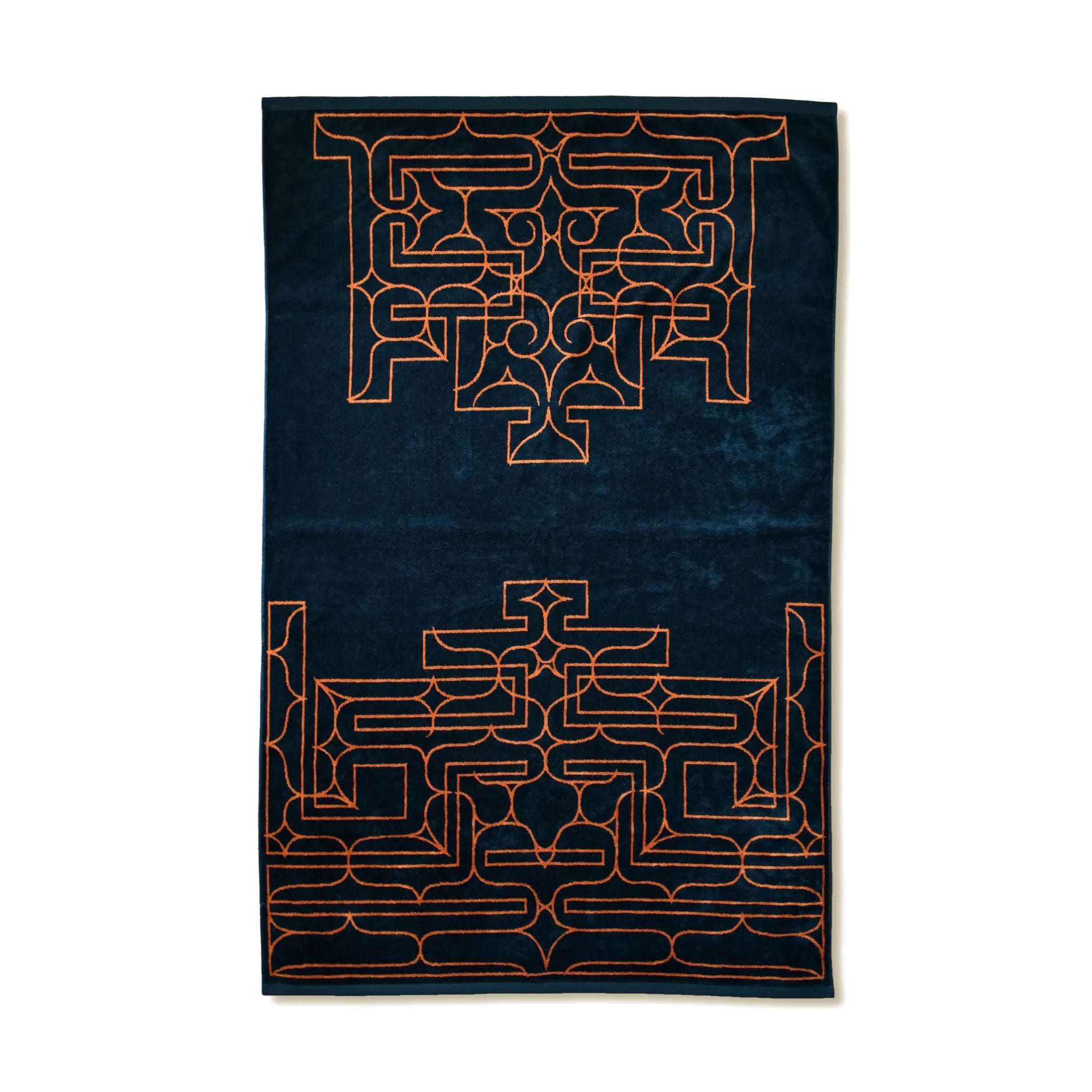
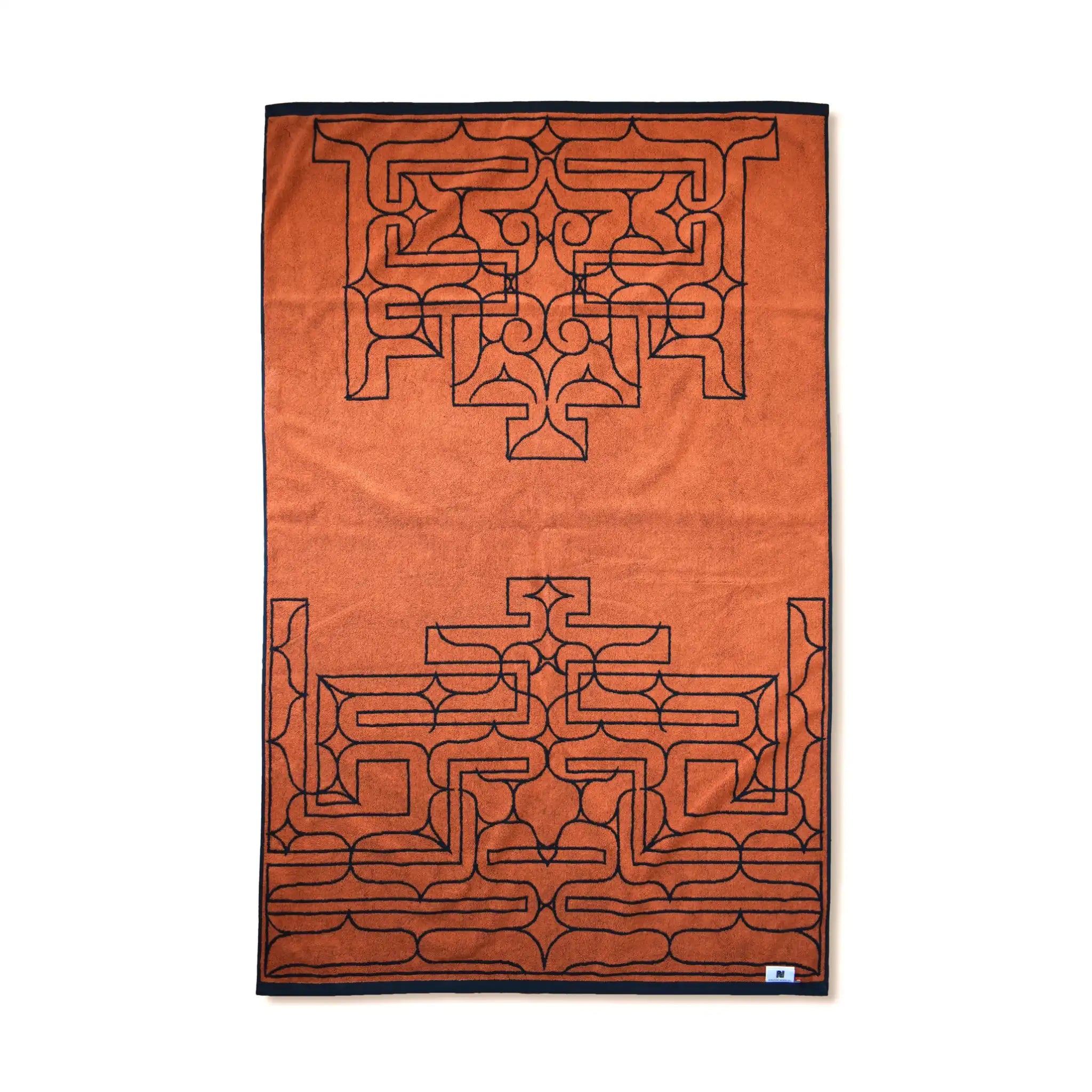
Nibutani, a village in Biratori Town on Hokkaido, is the center of living Ainu craft tradition in Japan. Kayano Kimihiro founded Nibutani Works there to create sustained work for Ainu artisans and keep the craft's inherited knowledge in active use. The cikarkarpe pattern across this blanket is built on angular, symmetrical forms — a geometric framework that reads as architectural against the deep navy ground, the orange lines tracing the design with precision. In traditional Ainu garment-making, these patterns were worked as protection, each element placed deliberately on behalf of the person who would wear the garment. The blanket is woven in Imabari, Ehime Prefecture, using soft water sourced from the Takanawa mountain range, a water quality that draws out cotton's natural softness and allows precise, vivid color expression in dyeing. The surface is shearing-finished, the pile cut to produce a smooth, close texture against the skin. The blanket is reversible: navy ground with orange pattern on one side, orange ground with navy pattern on the other. Only textiles that pass Imabari's independent inspection carry the certified Imabari Towel mark. This blanket carries it.
Check our tips for Care Information.
Choose options
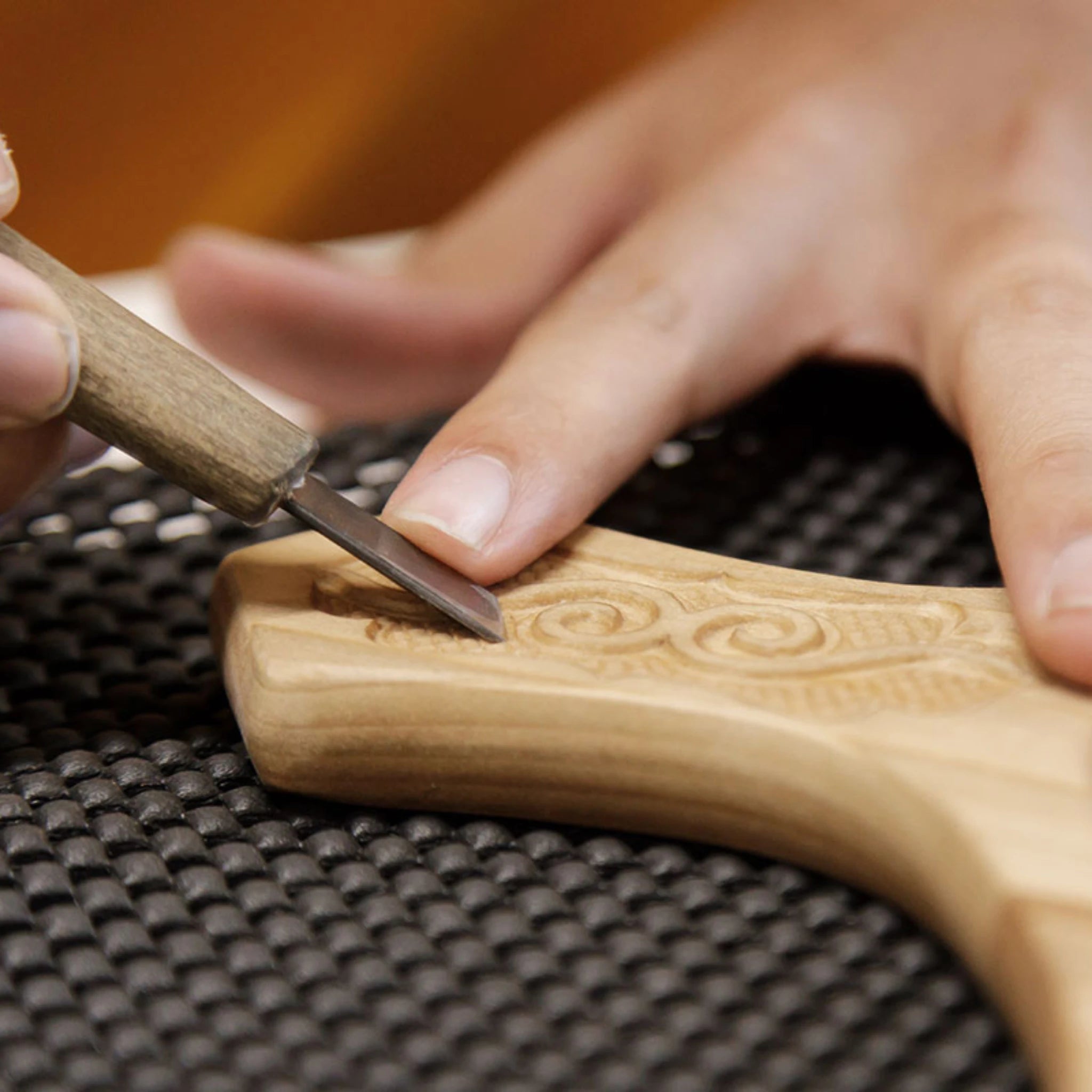
Meet the Artisan
Nibutani Works