Skip to content

Cart

Your cart is empty

Tsunesaburo 70mm Meimon Smoothing Plane

Sale price$499.00

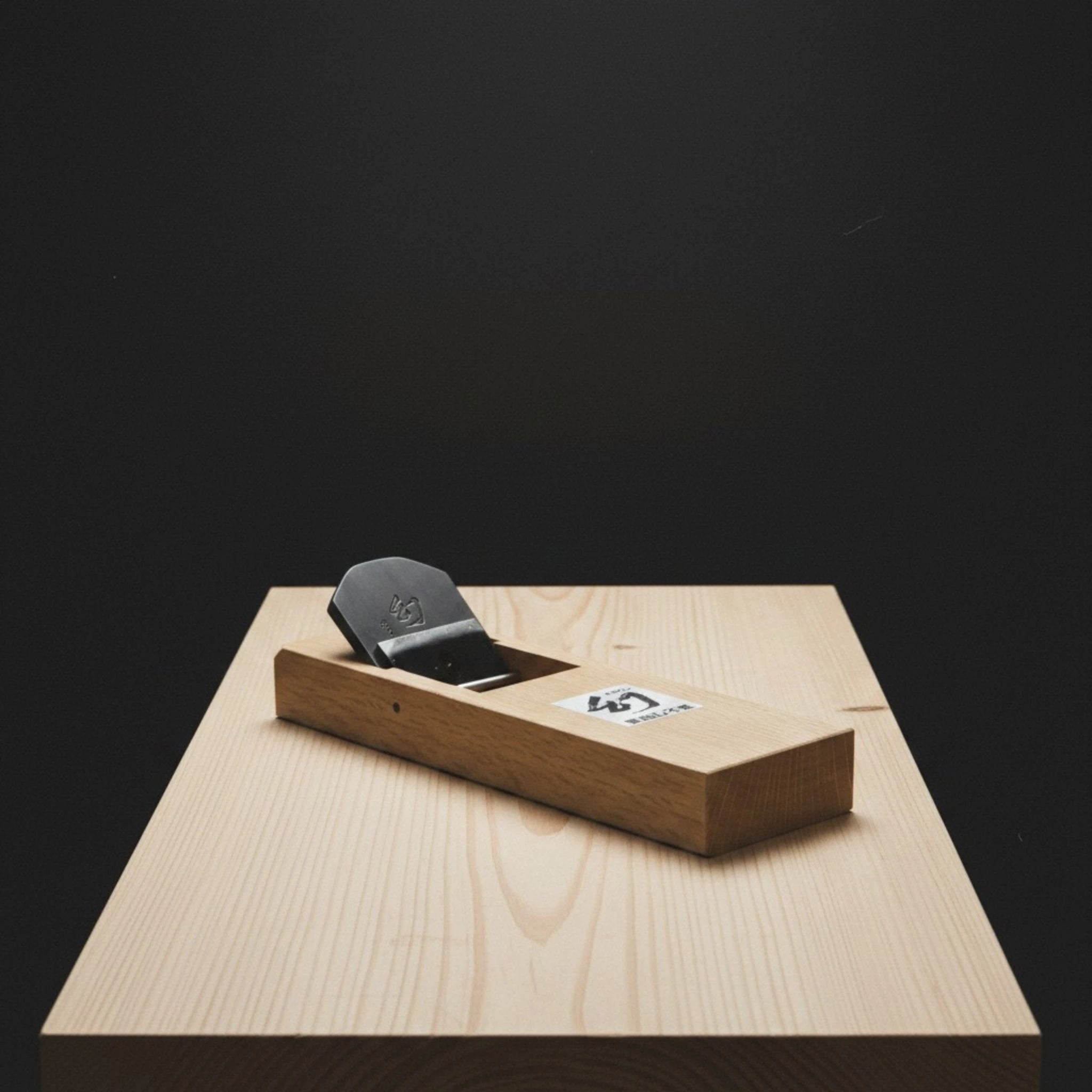
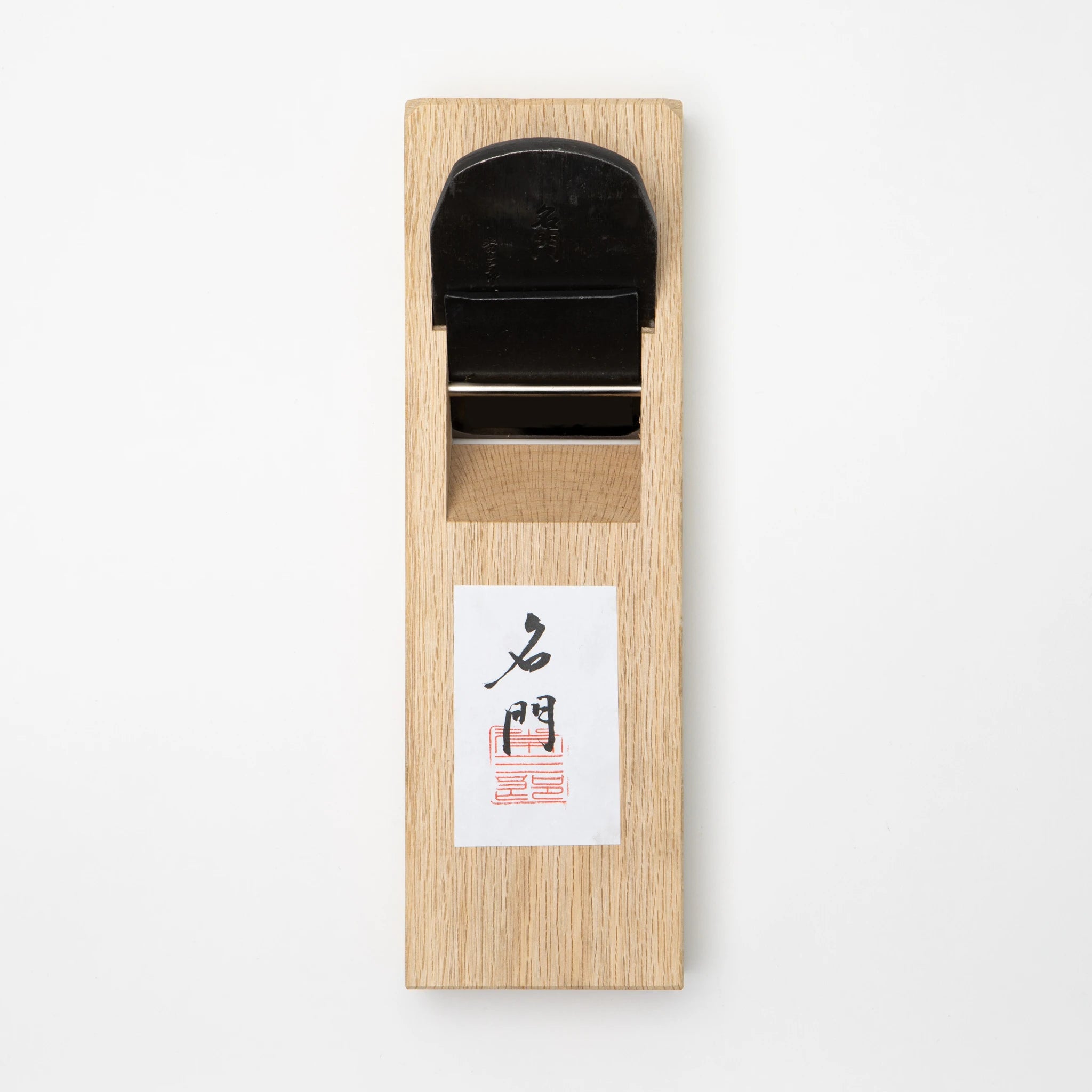
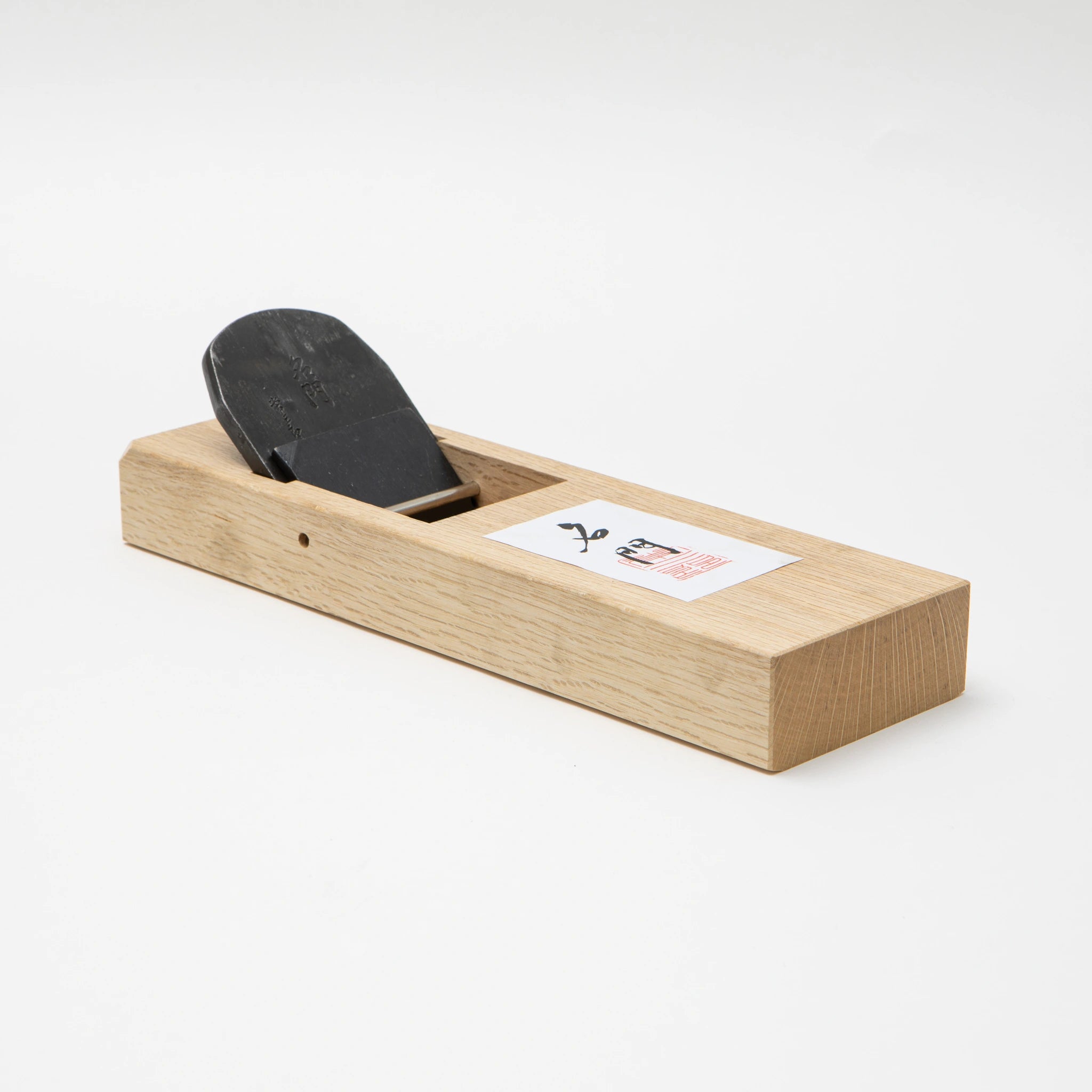
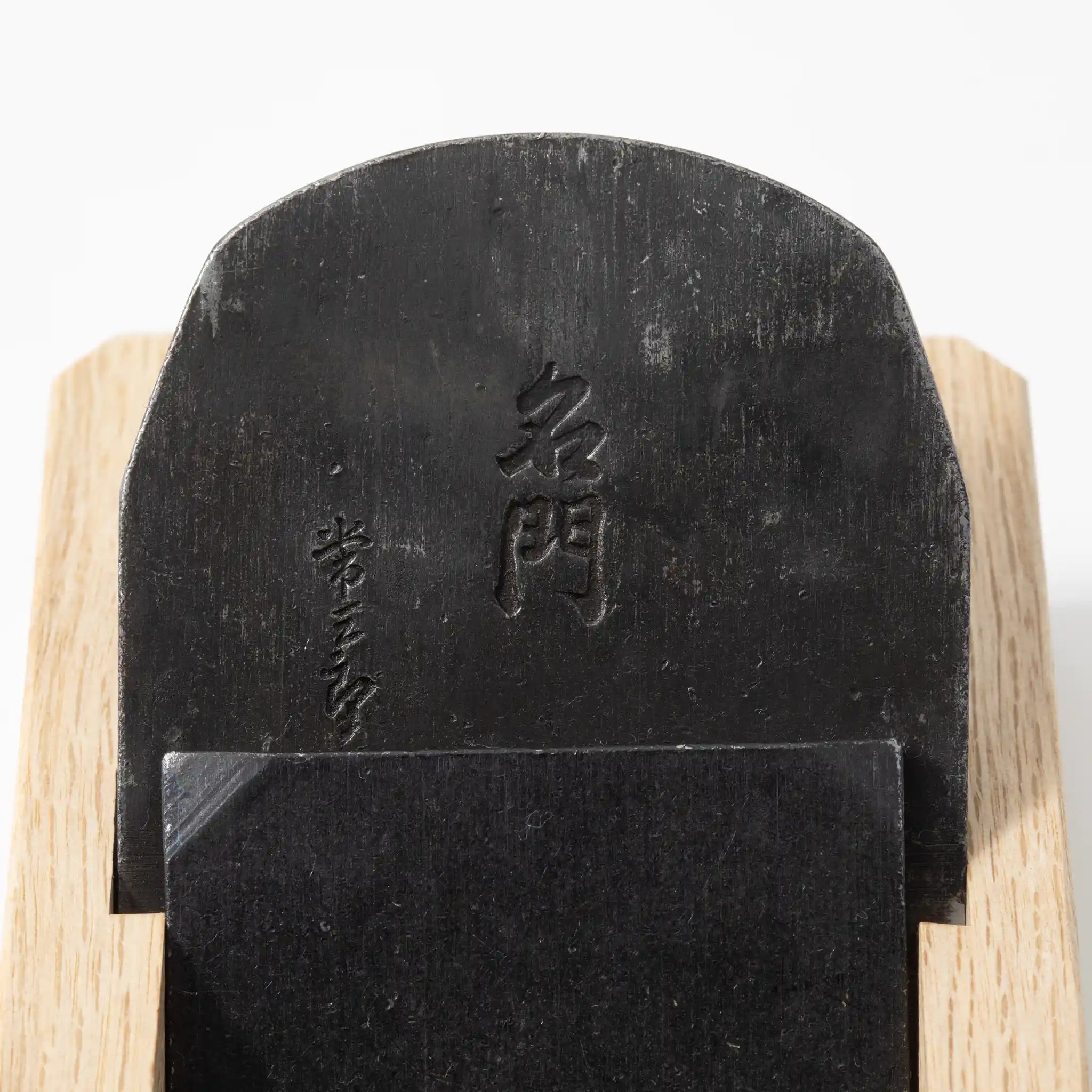
Tsunesaburo has forged planes in Miki City since 1947, working within a cutlery tradition that Banshu has held for over 600 years. The Meimon sits at the top of that work. Its blade is hand-forged from a special carbon steel selected for edge retention beyond what standard tool steels produce, forge-welded to a soft iron backing finished black as-forged. That backing material is not incidental — wrought iron of this character, prized by Japanese blacksmiths for its particular softness and response to the whetstone, has become genuinely scarce. The 70mm blade is seated into a white oak dai at 38 degrees in the tsutsumi-bori style, a wrapped hollow mouth that locks the blade's position and keeps it there through hours of use. The cutting edge is ground to 26 to 27 degrees. Each plane is made individually by hand. The tolerances do not come from a machine.

Front view of a Tsunesaburo Meimon 70mm smoothing plane, showing a white oak dai body with a black-finished blade seated in the tsutsumi-bori mouth, and a handwritten Meimon label affixed to the lower body.
Tsunesaburo 70mm Meimon Smoothing Plane Sale price$499.00

Meet the Artisan

Tsunesaburo

Tsunesaburo was founded in 1947 in Miki City, Hyogo Prefecture, when Uozumi Tsunemi, known as the original Tsunesaburo, established Tsunesaburo Kanna Manufacturing Studio after 28 years of study under his grandfather, a master plane-maker known as Fukusaburo Kanna. That grandfather had apprenticed at 13 to Kurokawa Utaro, a former sword smith, and absorbed the forging methods of Japanese swordcraft before redirecting them to plane blades. The lineage was built on that transfer. Uozumi Akio, the second generation, began learning at 13 alongside the studio's founding and spent 70 years at the forge, combining classical tempering with modern steel research into what the family holds as a guiding principle: that ancient and contemporary techniques are not in tension but in conversation. The current generation, led by Uozumi Toru as president, has extended that thinking into planes made from steels ranging from Meiji and early Showa period stock to modern high-speed alloys including HAP powder steel. For Tsunesaburo, the plane is inseparable from the Japanese built environment, and every blade that leaves the forge carries with it the expectation that a craftsman's work, and the spaces it produces, should be worthy of the steel.